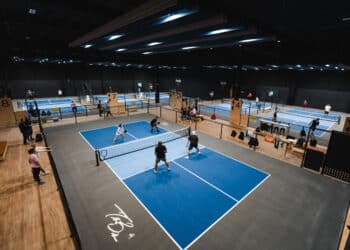
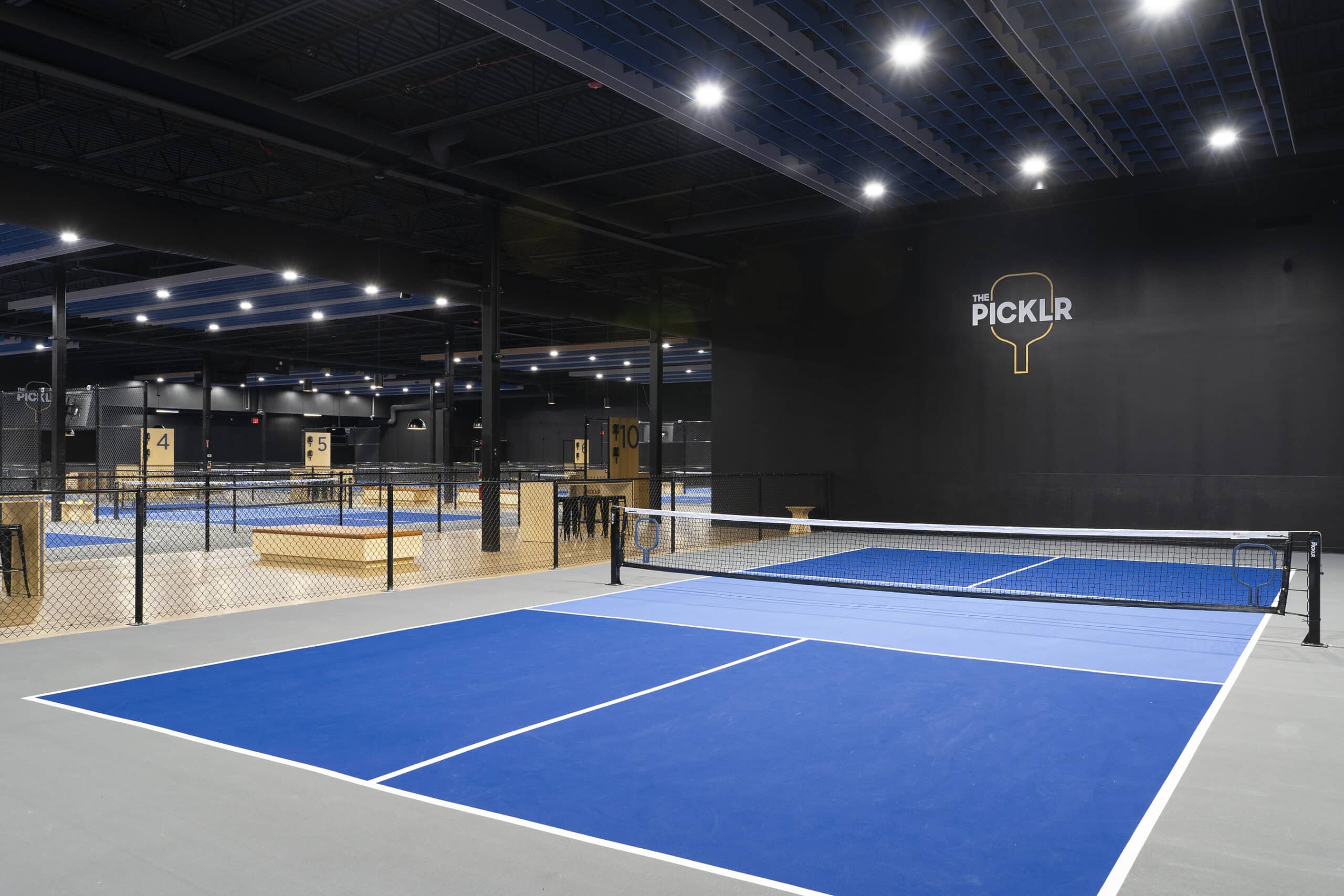

The Picklr’s corporate staff reductions and reported bankruptcy filings involving five franchise entities have sparked debate about the future of indoor pickleball, the viability of franchise concepts and what operators should learn from the developments.
To take the pulse of the industry, Pickleball Innovators gathered feedback from independent operators, a franchise founder and other industry professionals. Their perspectives differed on pricing, amenities and the value of franchising, but a common concern emerged: enthusiasm for pickleball can obscure the work and financial discipline required to operate a sustainable business.
The conversations also underscored the importance of distinguishing challenges at a particular company or ownership group from the prospects of an entire industry.
“Until the financial information and court process give us more visibility, I think it would be irresponsible to reduce this to a simple headline that says ‘pickleball clubs don’t work,’” said Sonny Tannan, a JOOLA-sponsored coach, RPO Level 2 clinician and PPR-certified professional.
Is the Industry Viable?
For Will Richards, the CEO and founder of Dill Dinkers, the recent news has not changed his belief that indoor pickleball can work. It has reinforced the importance of how a club is structured from the beginning.
“There’s nothing wrong with indoor pickleball,” said Richards. “There’s nothing wrong with the different lanes. But like anything, you have to do it right.”
He believes some owners entered the business on the strength of the sport’s growth without sufficiently examining leases, demographics or revenue assumptions. His concern is particularly strong around unlimited-play memberships that promise extensive access without generating enough revenue to cover a club’s costs.
Tannan similarly cautioned against treating participation growth as evidence that any facility will succeed. “People playing pickleball and people paying enough money, frequently enough, to support a 25,000 to 40,000-square-foot commercial facility are two different questions,” he said.
That distinction extends to how often members play. Two customers paying the same monthly fee can place very different demands on court capacity, depending on whether they visit occasionally or several times a week. Tannan believes those differences deserve careful modeling before an operator commits to an unlimited-play offering.
For Perry Leyden, the founder and CEO of Epic Pickleball Club, viability begins with understanding the real estate commitment and the ongoing expenses attached to it. Rent, labor and utilities can leave little room for error, particularly when loan payments and other obligations are added.
Seasonality compounds that challenge. Leyden shared that his own business has felt the pressure of summer cash burn, reinforcing the need for operating reserves that can carry a facility through slower periods.
Richards also emphasized the time needed for a club to mature. A location may eventually build a healthy business, but a costly build-out, high rent and debt payments can exhaust its resources before it gets there.
“You have to have the right model to begin with,” said Richards. “The numbers have to make sense, and then you have to be able to ride it out.”
There was less agreement on what the physical club should look like. Chris Sears, the founder of Indianapolis Pickleball Clubs, questioned the value of an amenities arms race that increases costs beyond what a local customer base can support. His approach emphasizes affordability and the community within the facility.
Meanwhile, Ballers in Philadelphia is focused on how they can offer more. Alex Luscher, who helps lead national operations for the company, described a concept that brings multiple sports and hospitality offerings under one roof. That might mean higher build-out and operating costs, but Ballers sees their design choices as an opportunity to serve a broader mix of customers and build community around multiple interests.
Luscher stressed that his observations were of the industry generally based on his experience at Ballers, rather than a diagnosis of The Picklr’s situation.
The differing approaches suggest that operators must understand which experience their market will support, what it costs to deliver and why customers will keep returning.
Is Franchising Viable?
The sources also offered differing views on whether a franchise provides enough value to justify its costs.
Richards sees a franchise’s central responsibility as helping owners avoid costly mistakes. At Dill Dinkers, he described that support as assistance with leases, reservation technology, marketing and the operational problems that arise after opening.
“We want to make sure you have the best lease, you have the best court reservation technology, you have the best marketing, you have support, and you have somebody to call when you have a problem,” said Richards.
In his view, royalties need to be supported by meaningful, ongoing assistance. He also believes franchisors have a responsibility to reject opportunities that do not make financial sense, even when doing so slows growth.
Sears does not view franchising itself as the sole problem. His concern is whether a standardized concept can accommodate the differences between local communities. “Each community is always unique,” he said.
As such, he believes operators need flexibility in the activities, programming and experience they offer.
Luscher emphasized that joining a franchise does not remove the prospective owner’s responsibility to scrutinize financial assumptions. A predefined concept may make starting a business feel more accessible, but projections still need to be examined against the realities of the location and the owner’s resources.
“Franchisees have to be rigorous about all of their numbers and expectations,” said Luscher.
For someone considering a franchise, these perspectives raise several practical questions: What support will the fees buy? How much flexibility exists to respond to the local market? What evidence supports the revenue assumptions? And can the individual club remain financially healthy after all its obligations are paid?
Lessons for the Industry
Test the assumptions before committing
Tannan encouraged prospective owners to examine how the business would perform if membership growth takes twice as long as expected, enrollment reaches only 70% of projections, construction runs over budget or another facility opens nearby.
“A business model should survive reasonable disappointment,” said Tannan.
That means examining the full cost of operating the club and the cash needed to sustain it while demand develops.
Richards’ emphasis on lower build-out costs and Leyden’s experience with seasonal pressures both point to the importance of preserving enough runway to respond when results fall short.
Understand the market beyond the map
Sears expressed concern about adding courts to areas where existing operators are already working to fill facilities. He cautioned against assuming that a new building or more expensive experience will automatically uncover a large, untapped customer base.
Leyden likewise questioned expansion decisions that place facilities close to established clubs without sufficient attention to local demand.
Their concerns highlight the need to examine competing options, customer spending habits and actual court usage before committing to a site. The popularity of pickleball nationally does not answer whether a particular neighborhood needs another indoor facility.
Treat opening day as the beginning
Leyden believes some owners underestimate how much work comes after the ribbon cutting. “The real work starts the next day, and every day after,” he said.
Building a community requires continued attention to programming, relationships and the daily experience inside the facility. A strong opening can create awareness, but operators still have to give players reasons to return.
Luscher described Ballers as a real-life experiment. At times, that’s meant adjusting staff responsibilities to match actual needs. Other times, it’s meant evolving hospitality concepts based on the pulse of the surrounding neighborhood. In Philadelphia, the team decided to rework its original restaurant concept after member feedback showed a need for something different.
“If we try something and it’s not working, because we are in full control of the concept, we’re able to pivot very, very quickly,” said Luscher.
Whether independent or franchised, a club needs a way to recognize when an approach is falling short and respond.
Make the response constructive
The sources described consequences that extend beyond the balance sheet. Richards said negative industry news has made prospective franchise buyers more hesitant. Leyden raised concerns about the effect on employees, instructors, members and the willingness of landlords to consider future pickleball tenants.
Those effects make transparency and thoughtful discussion especially valuable. Tannan called for more realistic projections, better education for prospective owners and greater visibility into the economics of individual facilities. Luscher emphasized the value of operators sharing experiences and learning from one another.
For Tannan, the measure of progress is whether clubs can continue serving the people who depend on them.
“The best outcome for pickleball is not having the greatest possible number of facilities open next year,” said Tannan. “It’s having healthy facilities that can still serve their communities 10 years from now.”

With over a decade spent covering the business side of sports and fitness, Rachel Chonko brings a wealth of experience and a true passion for active communities to Peake Media. As Editor-in-Chief, she’s focused on helping pickleball clubs and fitness facilities thrive, from guiding growth strategies to showcasing the latest industry trends. Rachel also hosts the Club Solutions Magazine Podcast, where she interviews leaders in fitness and pickleball to share insights and success stories with the wider community to give her listeners a competitive edge.
After taking up pickleball herself, Rachel has come to appreciate the sport’s unique blend of social connection and active living — a mix that’s perfectly in line with her editorial philosophy. Connect with her on LinkedIn, or check out her articles below for a deep dive into the energy and culture driving pickleball’s rapid rise.

Jordan Meek is a staff writer for Pickleball Innovators, where she covers the rapidly evolving business of pickleball — from facility growth and technology to player experience and industry strategy. A graduate of Denison University with a degree in Journalism, she joined Peake Media in 2025 and brings a passion for storytelling and curiosity to every piece. Jordan is driven to spotlight the leaders shaping the sport and uncover insights that help operators thrive in the fastest-growing game in America. Reach her at jordan@peakemedia.com.