
As indoor pickleball continues its rapid expansion, facility design has emerged as one of the most powerful differentiators between clubs that simply host play — and those that build lasting communities, drive repeat visits and unlock multiple revenue streams.
Interviews with operators behind two successful indoor concepts reveal a clear shift in how pickleball facilities are being designed today. From ceiling height and acoustics to social spaces and flexible infrastructure, the most forward-thinking clubs are designing with both play and experience in mind.
Here’s what today’s indoor pickleball club operators should be thinking about when it comes to facility design — and what the next wave of successful clubs are getting right.
Bigger, Brighter Courts Are Becoming the Baseline
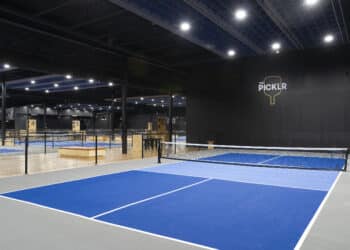
Court design is no longer just about fitting as many courts as possible into a building. Operators are increasingly prioritizing player comfort, visibility and safety, starting with the fundamentals.
At Premier Pickleball Club in Herriman, Utah, intentional structural decisions were made early in the buildout process.
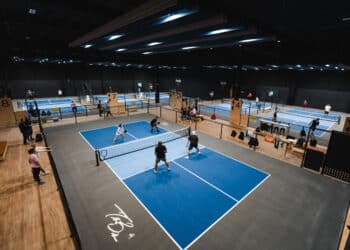
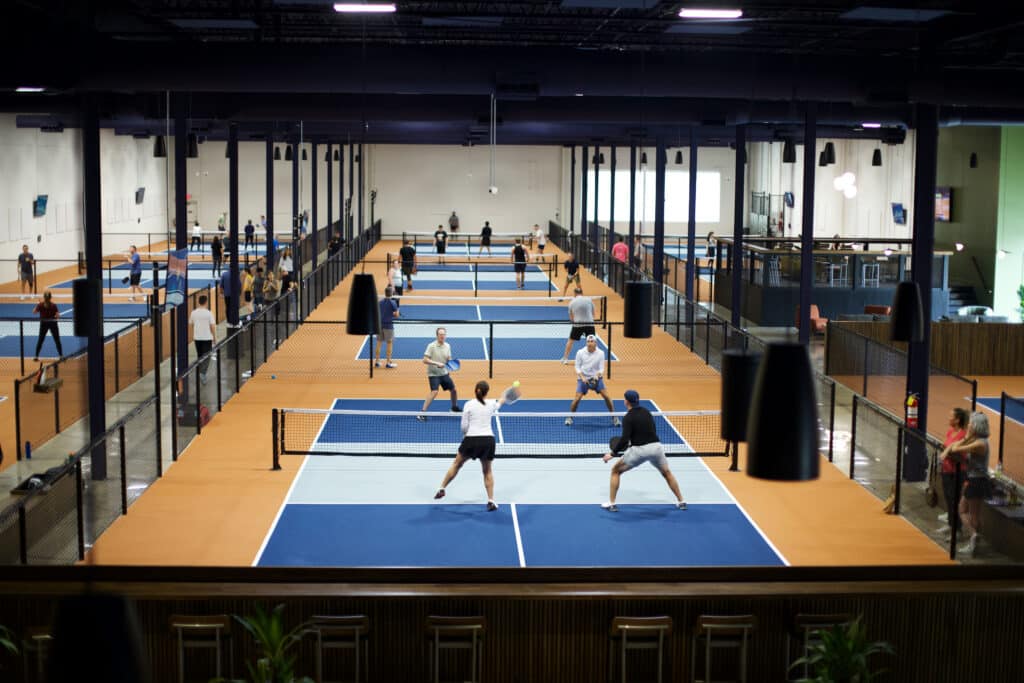
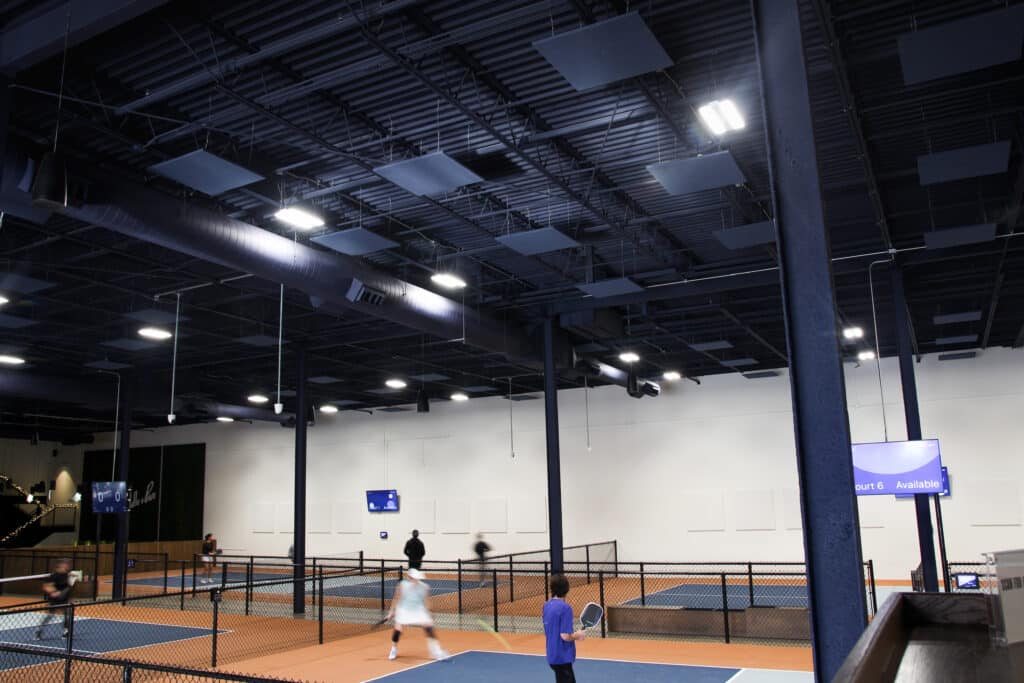
“We designed the building to accommodate large courts, high ceilings and no posts,” said Molly Hansey, the GM and co-founder of Premier Pickleball Club. “The building is free spanning so that it feels open and light. We added small windows to let in natural light without creating glare or shadows on the courts.”
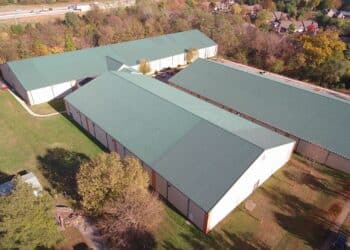
That approach addresses one of the most common challenges in indoor pickleball: retrofitting courts into existing commercial buildings that weren’t designed for the sport. Many facilities struggle because they are limited by pre-existing constraints.
“The operators in our market have all put courts into existing commercial buildings and have not been able to plan much around sound, air flow and court size,” explained Hansen.
At Paddle + Par, ceiling height was a non-negotiable consideration.
“You want minimum 19’ of height and need to consider where the structural columns are located long before you sign and lease,” said Neal Check, the owner of Paddle + Par in Beverly Hills, Michigan.
The takeaway: one fewer court with proper spacing, height and lighting often delivers a better member experience than squeezing in more courts at the expense of play quality.

Acoustics, Lighting, and Airflow Are No Longer Optional
As indoor pickleball clubs mature, operators are realizing that sound, lighting and temperature control directly impact dwell time and member satisfaction.
“You need to invest in great lighting, acoustical treatments and comfortable amenities,” said Check.
Lighting is particularly critical in spaces with windows.
“If you have windows, be prepared to shade them as there will be glare on the courts that is potentially dangerous,” Check added. “We have motorized shades at our club.”
Meanwhile, air circulation and HVAC design are becoming table stakes for premium indoor facilities. “AC is a major plus for players,” said Check.
Clubs that underinvest in these systems often hear about it from players — and see it reflected in shorter stays and lower repeat usage.
Designing for Pickleball’s Social Nature Drives Revenue
Pickleball is inherently social, and successful clubs are designing spaces that encourage players to stay — not leave — once games end.
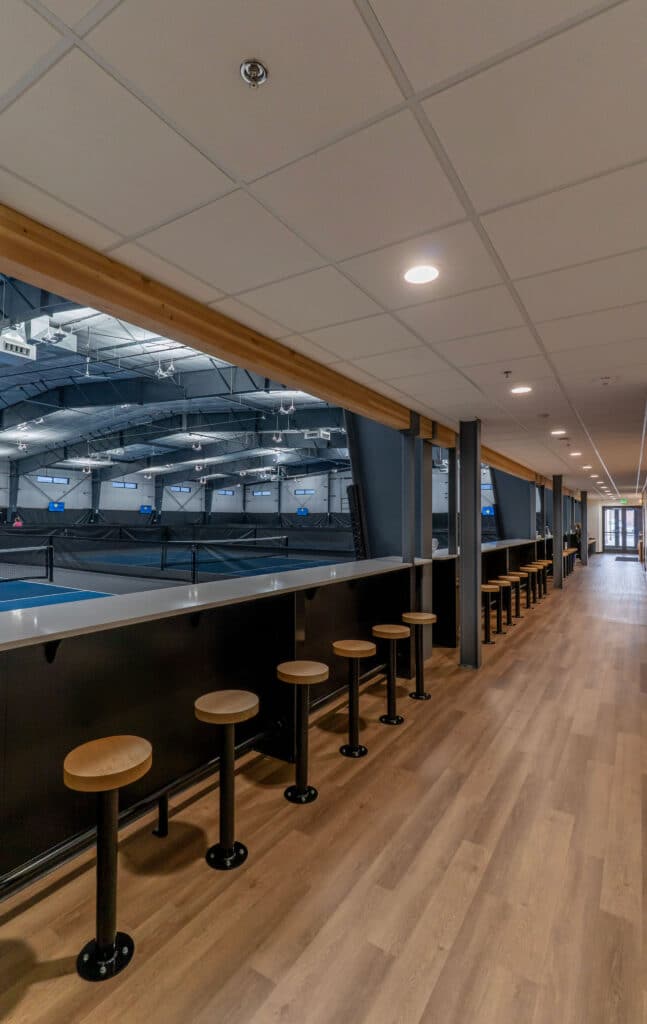
At Premier Pickleball Club, this meant creating intentional gathering areas throughout the facility.
“Pickleball is such a social sport so designs that allow people to connect between games is important,” said Hansen. “Giving people comfortable seating to allow putting on shoes, coats, packing/unpacking bags is important. We want our customers to stay in the facility to mingle after the game is over.”
And remember: seating isn’t just for players. “We also added seating specifically for observers — not players — so that parents could watch kids and people could watch tournaments without getting in the way of the players space,” added Hansen.
At Paddle + Par, the entire concept was built around creating a destination — not just a place to play.
“We wanted a to create a casual social country club feel,” said Check. “Elevated but approachable. We designed a beautiful bar/restaurant so not to look like it was an afterthought like I see at other clubs.”
That investment has paid off beyond daily play. “It was intentional and not only a wonderful amenity to our members and non-members, but the reason we are killing it with private events,” said Check.
Event-Ready Spaces Are Becoming Essential
Private events, corporate outings and non-pickleball programming are now core revenue drivers for indoor clubs — and facility design plays a major role in how easily those events can be executed.
Premier Pickleball Club built flexibility into its layout from the start.
“We added an event room with a kitchenette so that corporate events could plan with ease and not worry about presenting with too much sound on the courts,” explained Hansen.
They also accounted for guests who may not want to play.
“We added a game room so that if there are parties or corporate events and people don’t want to play pickleball they have space to play something else,” said Hansen.
Paddle + Par took this a step further with multiple event zones.
“We have 10 event areas that can be used simultaneously for multiple events or we offer full facility buyouts,” said Check.
The common thread: if you want event revenue and socialization, you must design for it.
“If you want a community, you need to create the environment, otherwise they have no incentive to stay and socialize,” said Check.
Flexible Design Protects Long-Term Profitability
As programming, demand and revenue models evolve, the most resilient facilities are those designed to adapt.
Premier Pickleball Club emphasized modularity.
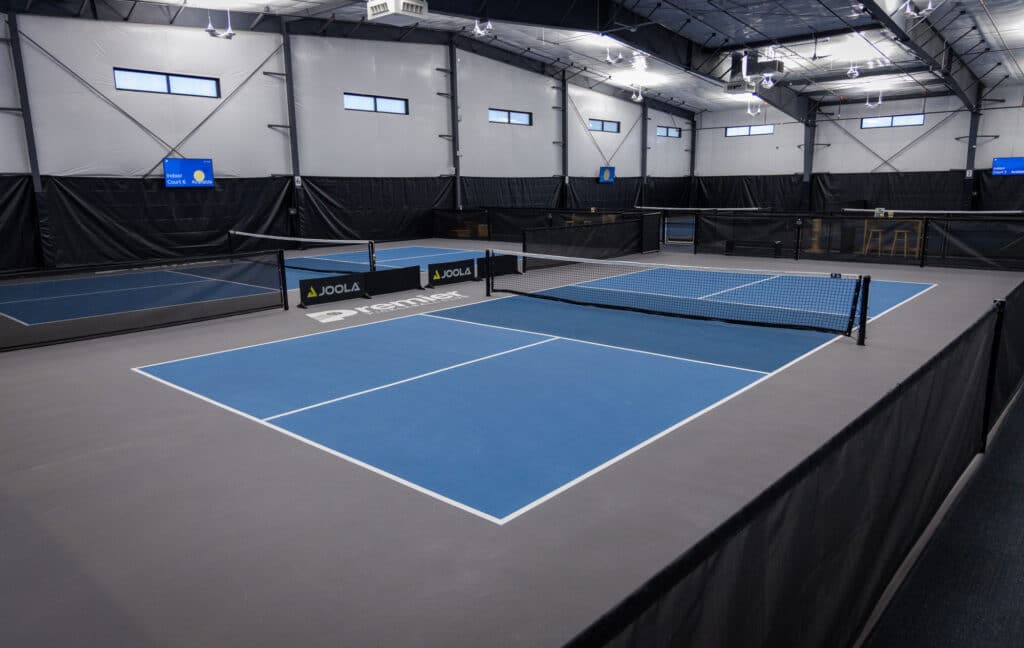
“Building spaces that can be used for additional revenue streams is ideal,” said Hansen. “We used semi-permanent court dividers so that we can remove them if we need to host something that’s not pickleball related.”
Paddle + Par looks at courts as multi-use assets.
“One pickleball court makes for two great table tennis courts that can really help during spring and summer,” said Check.
That flexibility allows operators to maintain utilization year-round — especially in weather-sensitive markets.

Future-Proofing for Technology Starts at Buildout
Technology infrastructure is becoming harder — and more expensive — to retrofit later.
Premier Pickleball Club invested early. “It’s important to build a lot of space to house technology,” said Hansen. “We built a very large electrical room that holds servers, extra equipment, fans, etc.”
At Paddle + Par, technology is viewed as a differentiator. “Technology or anything that can differentiate yourself from your competitors is important,” said Check.
Even if advanced features aren’t installed immediately, operators are planning ahead.
“Instant replay of points is a really nice feature and if you cant afford it, maybe prewire for it or anything else you may want to grow into,” said Check.
Lessons Learned: What Operators Would Do Differently
Looking back, both operators highlighted small design choices with outsized impact.
“I wish we had made more space at the check in desk so that it didn’t become congested when large groups of people came to one event,” said Hansen.
Visibility also matters.
“We should have designed the pro shop to be more visible as well,” Hansen added.
Meanwhile, Paddle + Par emphasized timing for a club’s grand opening.
“If you are in a weather sensitive area, you want to time opening with late summer or fall,” said Check. “Try to avoid opening in late winter or early spring. You need to bank dollars when it is your season and avoid opening when players are moving to the outside.”
He also stressed long-term planning — even beyond pickleball.
“There is not one thing I would change at Paddle + Par other than placing a padel court or two, which we will have in our future locations,” said Check.
The Big Picture: Design Is Strategy
Today’s indoor pickleball facilities are no longer just court containers. They are hospitality environments, community hubs and multi-revenue businesses — and design is at the center of that evolution.
As Hansen put it: “Be as flexible as possible with the design so that other activities can be hosted if they aren’t pickleball,” she said. “Build spaces that attract non pickleball players for additional streams of revenue.”
For operators entering the market — or planning their next expansion — facility design isn’t just an architectural decision. It’s a strategic one that shapes player experience, revenue potential and long-term viability.

With over a decade spent covering the business side of sports and fitness, Rachel Chonko brings a wealth of experience and a true passion for active communities to Peake Media. As Editor-in-Chief, she’s focused on helping pickleball clubs and fitness facilities thrive, from guiding growth strategies to showcasing the latest industry trends. Rachel also hosts the Club Solutions Magazine Podcast, where she interviews leaders in fitness and pickleball to share insights and success stories with the wider community to give her listeners a competitive edge.
After taking up pickleball herself, Rachel has come to appreciate the sport’s unique blend of social connection and active living — a mix that’s perfectly in line with her editorial philosophy. Connect with her on LinkedIn, or check out her articles below for a deep dive into the energy and culture driving pickleball’s rapid rise.