
Why engagement, authenticity and multi-platform content are reshaping how operators attract and retain sponsorships.
As pickleball facilities expand beyond court bookings into media, events and entertainment, sponsorships and advertising have emerged as a critical revenue stream. From livestreams and tournaments to in-club activations, operators have access to valuable differentiators. The challenge, however, is how to sell them.
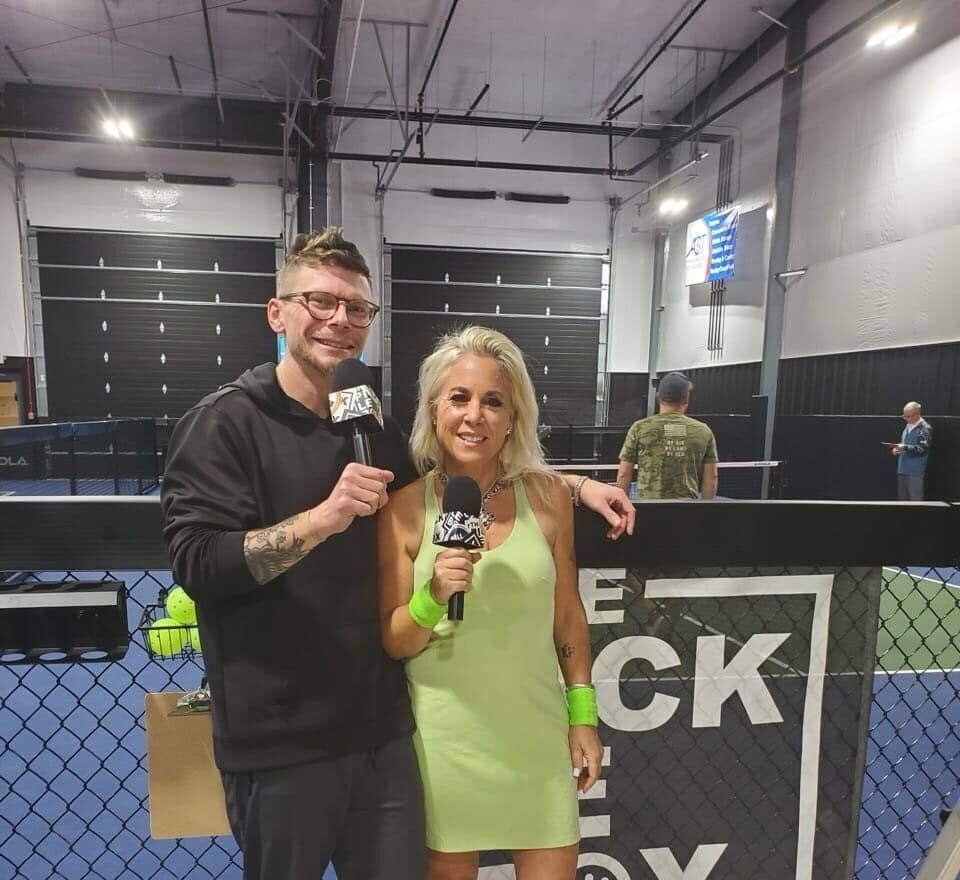
John Braun Jr. and Sarah Bowman — podcast co-hosts, coaches, competitive players and leaders at Dill Dinkers in Hagerstown, Maryland — have built a fast-growing system that combines livestreaming, content, community and sponsorships.
Their approach offers an example for operators to turn attention into revenue.
Thinking Beyond Pickleball
Utilizing their experience as hosts of The PickleBox Podcast and well-known members in the pickleball community, Braun Jr. and Bowman have consistently sold-out ad space within the Dill Dinkers Hagerstown King & Queen event livestream.
A central element of their sponsorship approach is looking beyond the pickleball space — specifically, understanding what their audience spends money on outside the club.
Bowman emphasized that players bring their entire lifestyle with them, not just their paddles.
“Everyone who plays pickleball has a whole other life outside of the club,” said Bowman. “You’ve got to think bigger. They’re the ones maybe renovating their house, planning a vacation, going out to eat at a nice restaurant.”
This reframes sponsorship sales from niche to mainstream. The real asset isn’t just pickleball, but access to an engaged customer base.
Building Attention Before Selling It
Braun Jr. and Bowman didn’t begin with a sponsorship strategy. They began by creating content — first a podcast, then livestreaming — and letting audience demand follow.
“Our views skyrocketed, so we decided we could earn some money and help build out a better production,” said Bowman.
That organic growth helped them establish credibility and a reputation to bring in sponsors. Rather than trying to sell hypothetical exposure, they sold proven attention backed by real metrics. By building something people wanted to watch or attend first, the monetization became significantly easier because the demand was visible.
From Personal Networks to Scalable Outreach
Early sponsorships for the duo came primarily from personal connections, which helped them build momentum quickly. They also did cold outreach, something the two were comfortable doing with their backgrounds in law and the restaurant business.
From there, they layered in a more scalable approach, leveraging social media platforms like LinkedIn and Facebook as a distribution and lead-generation tool, gaining advertisers from those posts alone.
The key distinction is that social content isn’t just marketing to consumers, but also to potential sponsors. By consistently publishing results, engagement and energy, they create “warm” leads rather than relying solely on their connections or cold outreach.
Extending Value
While the podcast plays a role, Braun Jr. and Bowman have been careful to not treat any single channel as the driver of success.
“We try and make it as full as possible,” said Bowman. “It’s our training, competition, classes, even just a hike or a trip. We’re real people online.”
This matters because sponsors aren’t buying a single placement. They’re buying access to a consistent, multitouch presence that only comes from building relationships. It ultimately shows that sponsorship value increases when media, programming and personality are integrated.
But not all of this is created equal. A static livestream with minimal engagement generates limited value. Braun Jr. learned this first-hand when testing a non-hosted stream.
“It was just playing,” he said. “No banter, nobody reacting to the comments. The views were ridiculously low.”
Their regular livestreams are highly interactive, blending commentary, humor and audience participation, making it as organic as possible.
This level of engagement directly impacts sponsorship effectiveness. Ads placed within an active, entertaining environment are more likely to be noticed and remembered.
A defining element of Braun Jr. and Bowman’s success has been their commitment to authenticity, both in their content and in partnerships.
“We will never have anyone that tells us what we can and can’t say,” said Braun Jr., emphasizing their focus on a consistent brand identity.
This authenticity extends to their live commentary, where analysis seamlessly blends with humor and personal interaction. The result is a format that feels less like a broadcast and more like a shared experience.
“If we weren’t being authentic, it would be nearly impossible to sustain it week after week,” said Bowman.
For sponsors, this authenticity enhances credibility and for operators, it reinforces that long-term value often outweighs short-term revenue opportunities.
Bigger Than Just Sponsorships
One of the most important lessons to come from the duo is that sponsorships don’t exist in isolation. It’s part of the greater ecosystem they’ve created that includes their events, teams, media and community engagement.
Their professional pickleball team, livestreams and in-club programming at Dill Dinkers Hagerstown all feed into one another, expanding their overall reach.
This integration amplifies sponsor exposure across multiple areas — from in-person spectators to online viewers — increasing overall value.
Despite their success in monetization, Braun Jr. and Bowman continue to prioritize the community first.
“You have to care about your community,” said Braun Jr.
Bowman echoed that. “Set your values and the money will follow,” she said.
This highlights the idea that sponsorship revenue is not just a sales function but a byproduct of engagement, trust and experience.
Selling sponsorships around events, courts and livestreams isn’t about inserting ads into empty space. It’s about creating something worth watching, building a community around it and then inviting brands to be part of that experience.
Braun Jr. and Bowman have demonstrated that when content, authenticity and community align, sponsorships become less about selling and more about partnership.

Jordan Meek is a staff writer for Pickleball Innovators, where she covers the rapidly evolving business of pickleball — from facility growth and technology to player experience and industry strategy. A graduate of Denison University with a degree in Journalism, she joined Peake Media in 2025 and brings a passion for storytelling and curiosity to every piece. Jordan is driven to spotlight the leaders shaping the sport and uncover insights that help operators thrive in the fastest-growing game in America.