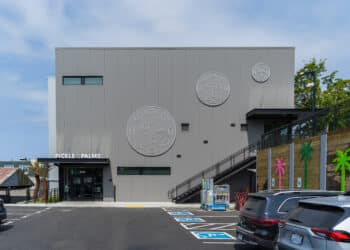

Any day of the week, upon entering Wolverine Pickleball Club in Ann Arbor, Michigan, you’ll find people playing, well, pickleball. But you may also find them doing a host of other social activities — beach tennis, sand volleyball, bocce, curling, mahjong, goat yoga, trivia, and more.
This is because although pickleball was the catalyst for the club, it was never meant to be the ceiling. For owner Christy Howden, the real product was always something harder to put on a court map: community. And two and a half years into their premier facility, that bet is paying off in ways even she didn’t anticipate.
Beyond the Courts
Wolverine Pickleball didn’t start this way. Their first location was a DIY warehouse — gritty, scrappy, and according to Howden, exactly what they needed.
“We learned a lot doing that DIY,” said Howden. “We could be very dynamic. We experimented with different things. What would people be willing to pay? What made it valuable to people?”
During that process, Howden and her team gleaned insights they brought into their second, purpose-built facility. In addition to premium courts and finishes, the new space has plenty of spaces in which the community can socialize, including a fireplace, a lounge separate from the playing area, and a full-service kitchen is currently under construction.
Every addition is designed to give members a reason to stay longer, come back more often, and bring people who have never touched a paddle.
Community Building is No Accident
Ask Howden how Wolverine Pickleball builds community and she’s direct: it’s not something she just hopes will happen.
“It’s not a hope,” said Howden. “It’s definitely something that’s cultivated and worked on. We know our members. I’m here for people to talk to, to get engaged with. We work to make those introductions so people can expand their friend circle.”
That intentionality runs through everything — staff hiring, programming design and even what new activities they add to the calendar. The addition of mahjong came about as a natural extension of a core group of members who played at the club, drawing interest from others.
“I think everyone in pickleball is always a lifelong learner, so they’re really apt to try these new opportunities,” said Howden.
In addition to drawing inspiration from core members within Wolverine Pickleball, the club seeks to be an outward source of support for the broader Ann Arbor community.
Wolverine Pickleball Club supports local entrepreneurs, offers internships to University of Michigan and community college students, and shows up for school PTA auctions. They don’t just operate inside the community — they actively invest in it.
“We listen to what people are interested in and try to bring that in here so that they can bring other friends who maybe are not pickleball players,” said Howden.
Programming Quality Is Non-Negotiable
As the pickleball industry matures and players grow more discerning, Howden is clear-eyed about what separates the clubs that are thriving from those that are struggling.
“Programming is a key to it that really gets people engaged so that they feel welcome to come play,” said Howden. “The quality of play has to be watched. Sometimes we have to have uncomfortable conversations with people. You don’t get to make varsity as a freshman.”
It’s a hard conversation to have, but Howden argues it’s a necessary one. Letting skill-level mismatches slide might feel like the path of least resistance, but it quietly degrades the experience for everyone else — and eventually drives the players you most want to keep right out the door.
Quality control in programming, she believes, is one of the most commonly overlooked failure points in the industry right now.
The Bigger Picture
Howden didn’t open Wolverine Pickleball expecting to run a place where people heal, find friends, and feel like they belong. But that’s what it became.
“The biggest surprise I’ve gotten doing this is the impact we have on people’s lives that I never dreamed of,” said Howden. “People’s stories — maybe how they were struggling and how pickleball was a sanctuary, a respite from the rest of the world. That surprised me more than anything about this business.”
That surprise points to something operators across the industry are beginning to reckon with. As traditional third spaces — the neighborhood bar, the church, the civic club — continue to disappear from American life, pickleball facilities are stepping into that role.
The courts may get people in the door. But it’s everything else that makes them stay.
Prefer to listen? The full interview can be found on SoundCloud, Apple Podcasts and Spotify.

With over a decade spent covering the business side of sports and fitness, Rachel Chonko brings a wealth of experience and a true passion for active communities to Peake Media. As Editor-in-Chief, she’s focused on helping pickleball clubs and fitness facilities thrive, from guiding growth strategies to showcasing the latest industry trends. Rachel also hosts the Club Solutions Magazine Podcast, where she interviews leaders in fitness and pickleball to share insights and success stories with the wider community to give her listeners a competitive edge.
After taking up pickleball herself, Rachel has come to appreciate the sport’s unique blend of social connection and active living — a mix that’s perfectly in line with her editorial philosophy. Connect with her on LinkedIn, or check out her articles below for a deep dive into the energy and culture driving pickleball’s rapid rise.