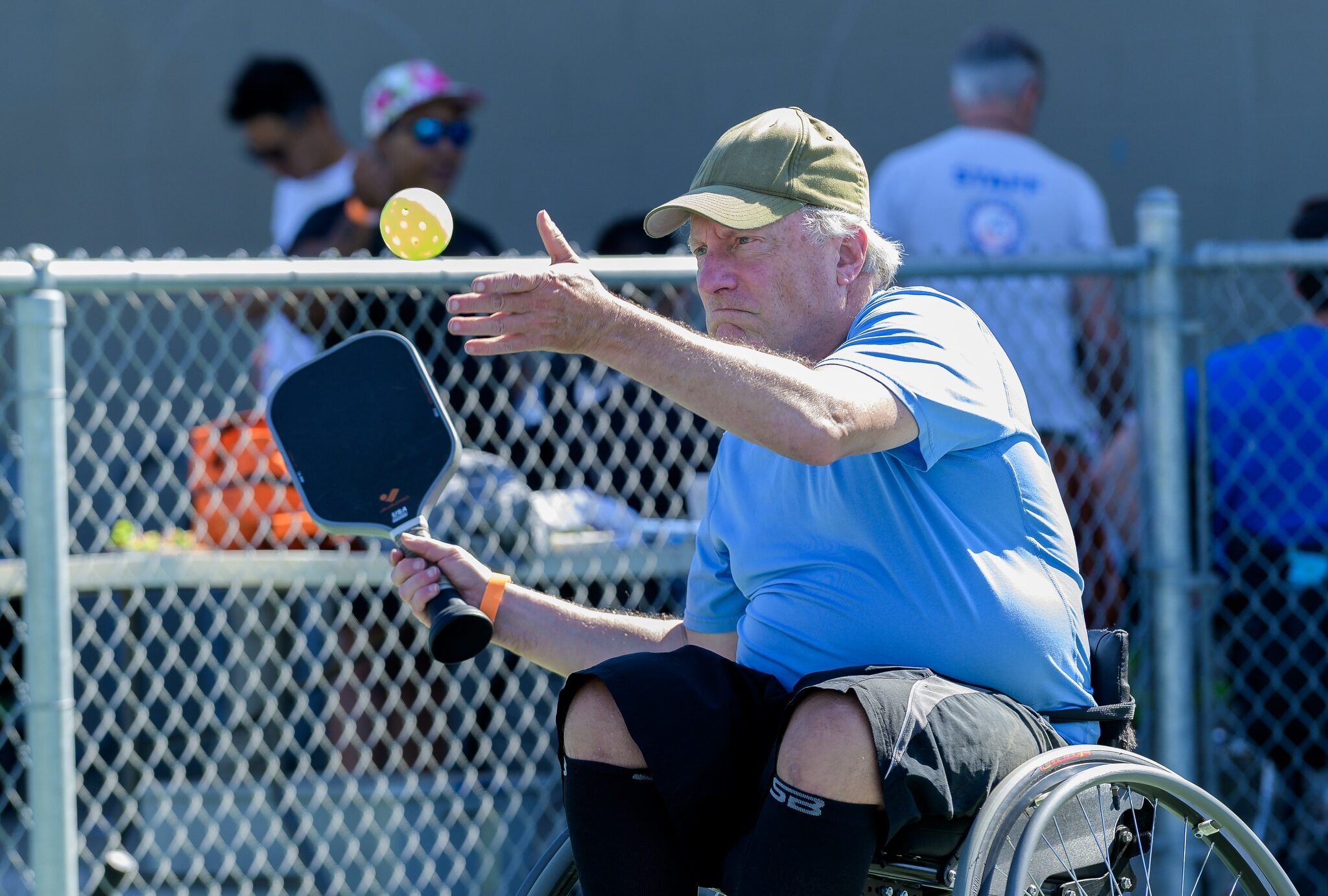
Look at how these organizations are taking the inclusive sport and making it accessible for everyone — and how other operators can do so too.
Pickleball’s appeal is often tied to its accessibility — easy rules, smaller courts and a social atmosphere that welcomes players of varying ages and abilities. But in many communities, that accessibility is being taken a step further through adaptive pickleball programs designed for players with physical, intellectual and developmental disabilities.
Across different facilities and organizations, adaptive pickleball is emerging not only as a recreational offering but also as a pathway to inclusion, confidence and community connection. For operators, that expansion represents both a community responsibility and a meaningful programming opportunity.
Minimal Modifications, Maximum Reach
One reason pickleball translates well to adaptive programming is because of the sport’s inherent flexibility. Its rules, pace and equipment make it easier to modify than many traditional sports.
“Pickleball in general is very easy to learn and be able to play in a meaningful way right from the get-go,” said Bill Powning, the volunteer pickleball coach at the Bay Area Outreach and Recreation Program (BORP), which focuses on adaptive sports. “In five or 10 minutes, you can basically have [anyone] playing an actual game. And the same kind of thing applies for people with disabilities.”
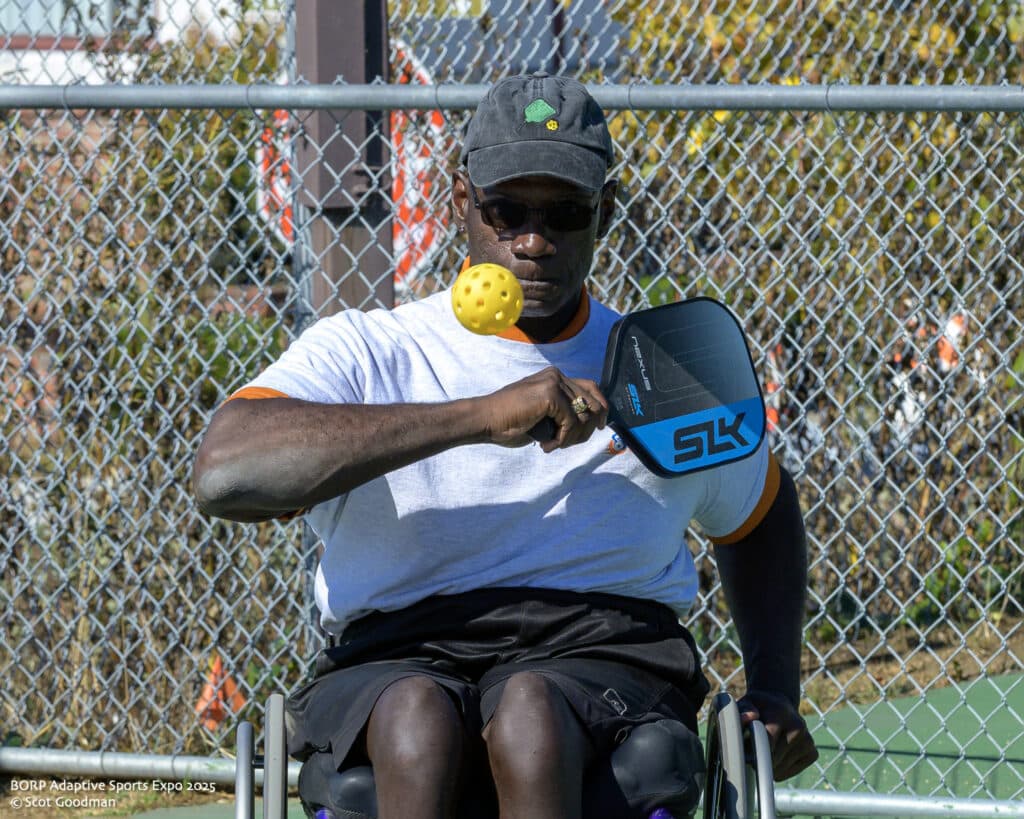
For players using wheelchairs, the official rule adaptation is minimal. They are simply allowed two bounces before returning the ball. Otherwise, the sport largely remains the same.
The physical environment also lends itself to accessibility. Molly Bloom, the program director at BORP who uses a manual wheelchair herself, said the smaller court size and simple rule structure help lower the barrier to entry.
Unlike many adaptive sports, which often require specialized and expensive equipment, pickleball can often be played with what participants already have.
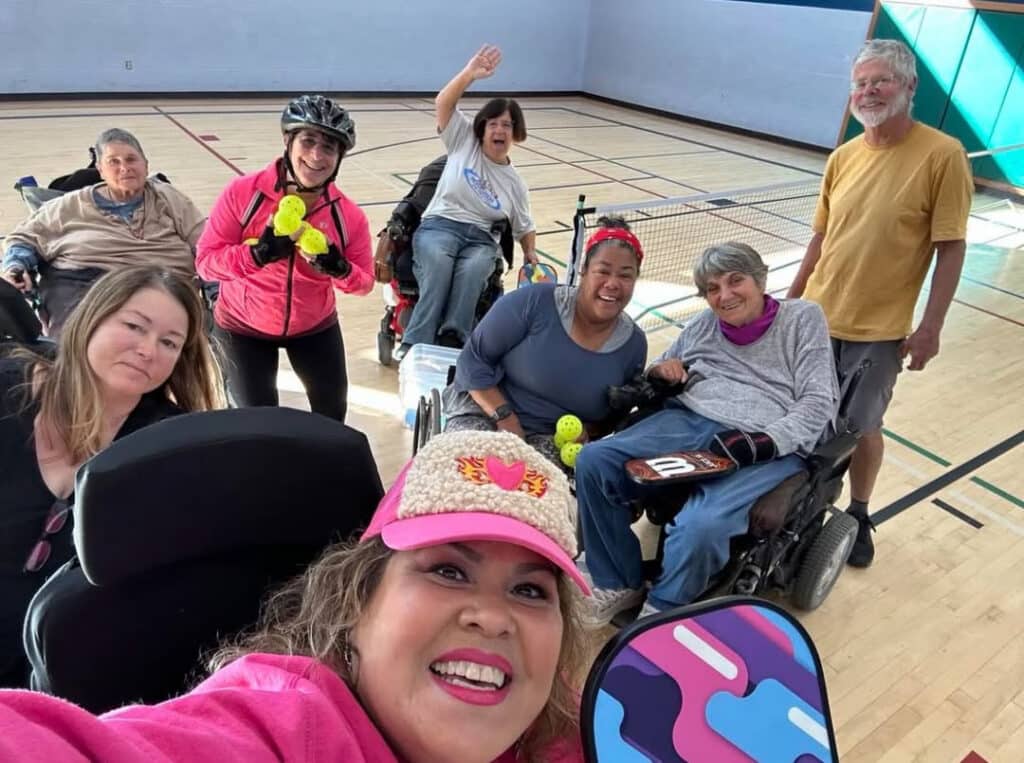
“You can play in a sports chair, or you can play in your everyday manual chair,” said Bloom. “People in power chairs can play alongside people in sports chairs or manual chairs, which doesn’t usually happen in adaptive sports.”
The combination of low cost, simple rules and flexible gameplay has helped adaptive pickleball programs gain traction in a relatively short time.
Meeting Players Where They Are
While the sport itself is adaptable, successful programs often rely on thoughtful instruction and a willingness to tailor the experience to the individual players.
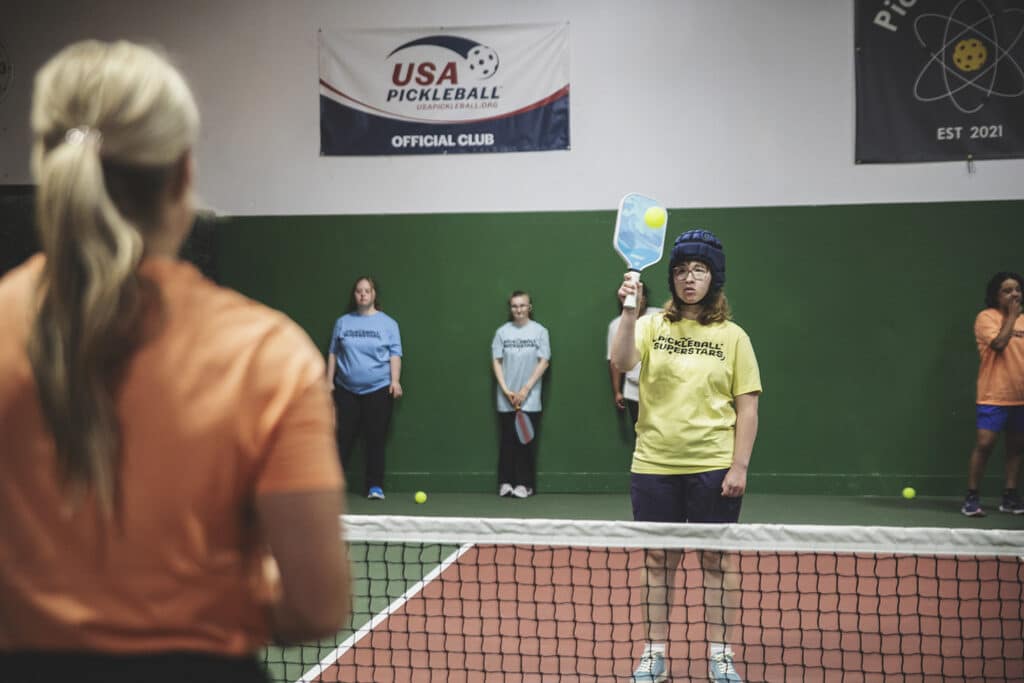
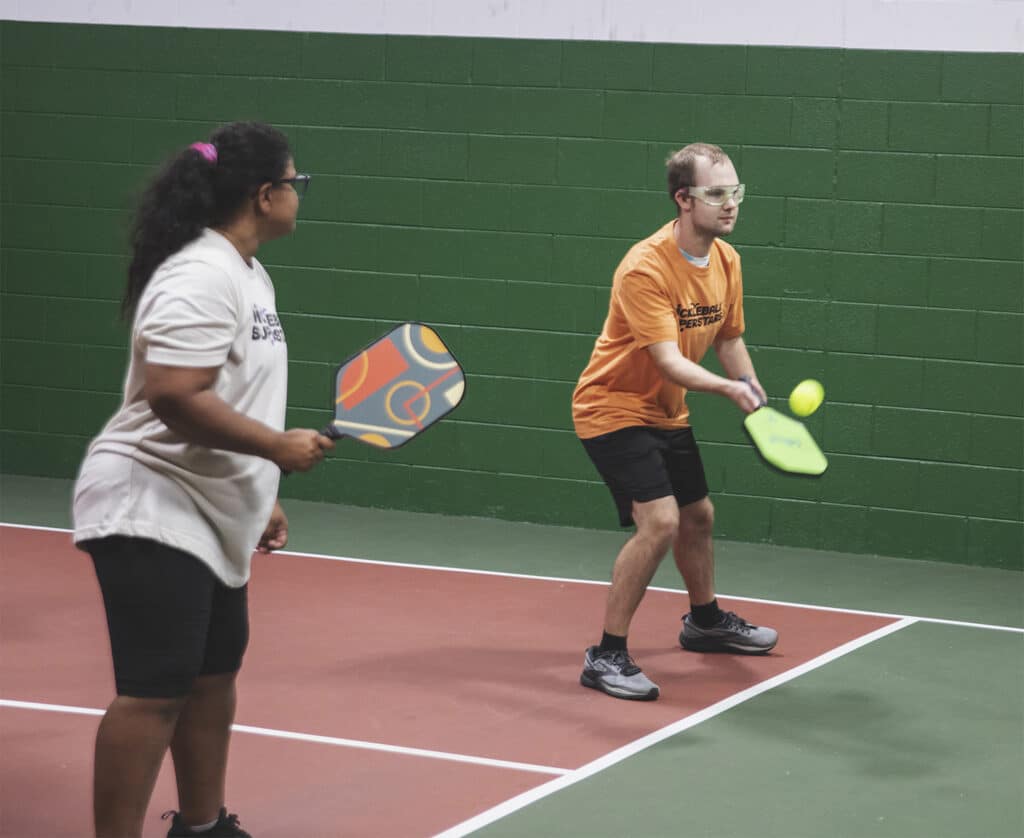
Rachel Rizzo and Jordan Pintar, the co-founders of Pickleball Superstars in Cedarburg, Wisconsin, focus their programming on individuals with intellectual and developmental disabilities. Their approach starts with designing an environment that supports participants’ sensory and emotional needs, considering things like lighting, sound levels and overall distractions on the court.
From there, instruction is adapted to each participant’s abilities. Classes are structured in different levels, similar to traditional pickleball, allowing players to progress at their own pace.
“If someone is ready to play a full game with the full court, we’ve got room for you,” said Pintar. “And if you’re more comfortable just learning step by step, we adjust to that.”
Even the equipment can change depending on the player. Larger, slower training balls — similar to those used in youth tennis — are sometimes used to help beginners build confidence and make contact more easily.
In other cases, simple modifications can make a big difference. Powning described using Velcro straps to attach paddles to the hands of players who struggle to grip them, allowing them to participate in rallies.
The goal across programs is the same: create an environment where players can succeed.
“You just kind of figure out what they’re capable of and what kind of adaptation they need,” said Powning.
Returns Beyond the Court
For participants, the benefits of adaptive pickleball extend well beyond physical activity.
Programs frequently become social hubs where players build relationships and confidence while engaging in sport. At BORP, Bloom said the sense of connection is one of the most consistent outcomes of their programs.
The sport itself can also reshape how participants view themselves. Bloom recalled writing a recommendation letter for a player applying for a grant to purchase a sports chair after discovering pickleball later in life.
“She had a lifelong disability and felt like she never had access to sports growing up,” said Bloom. “When she discovered pickleball, it completely changed her orientation on athletics and her role as an athlete.”
Programs are also seeing measurable outcomes — a data point that can serve well when marketing and demonstrating community impact. Pickleball Superstars tracks mood and health metrics from participants before and after class. They are excited to go to class and that only goes up.
“There’s a significant mood increase after class,” said Pintar, adding that caregivers often notice the positive effects extending beyond the court.
The Club Opportunity
As adaptive pickleball grows, operators of dedicated pickleball facilities are beginning to explore how these programs could fit within their own clubs.
For Pintar, the first step is education and intentionality. Facilities must understand the needs of the populations they aim to serve, including sensory sensitivities and the importance of predicable routines.
“Being thoughtful and educated about the population is really important before you even consider getting anybody in the door,” said Pintar.
Partnerships with local disability organizations can also help with outreach and program design. Bloom noted that many facilities hesitate to approach disability communities simply because they are unsure how to start.
“People are worried they might offend someone or phrase something incorrectly,” she said. “But organizations like ours can help connect clubs with the community.”
Importantly, programs don’t necessarily need a large financial investment. “You can offer a program and not have any sports chairs, and people will still be able to enjoy it,” said Bloom.
Even volunteers without coaching backgrounds can contribute by assisting players, retrieving balls or providing basic support on the court. For clubs looking to launch a program, that means existing staff and engaged members can play a meaningful role from day one.
Building Momentum
Adaptive pickleball remains relatively small compared to the broader sport, but the momentum is building. Demonstration categories for adaptive players are beginning to appear in larger tournaments and grassroots programs are forming across the country.
For the leaders behind these programs, the long-term vision is a future where adaptive pickleball is not a niche offering but a standard part of the overall sport.
“We think it’s important that every club should be including some kind of adaptive programming,” said Rizzo. “Not only will it impact the players using it, but members will see the impact the club is having on the community.”
Adaptive programming represents more than an additional amenity. For operators, it’s an opportunity to extend the sport’s defining trait of accessibility to populations that have had fewer opportunities to participate in athletics, while differentiating their facilities as true community hubs.
And in doing so, it reinforces one of pickleball’s most powerful qualities — the ability to bring people together on the same court.



Jordan Meek is a staff writer for Pickleball Innovators, where she covers the rapidly evolving business of pickleball — from facility growth and technology to player experience and industry strategy. A graduate of Denison University with a degree in Journalism, she joined Peake Media in 2025 and brings a passion for storytelling and curiosity to every piece. Jordan is driven to spotlight the leaders shaping the sport and uncover insights that help operators thrive in the fastest-growing game in America. Reach her at jordan@peakemedia.com.