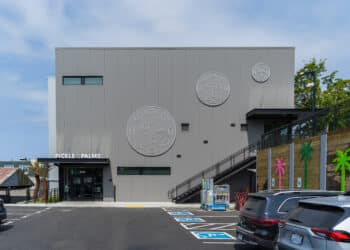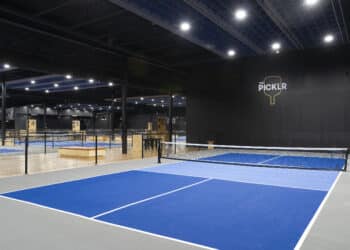

In September, Portable Sports Group, a pop-up pickleball brand, hosted its largest event to date — the Carmel Classic.
Over 48 hours, 267 players played 368 matches in the tournament hosted at Portable Sports Group’s partnered facility, Pickle on Penn. During and post-event, the organizers received rave reviews for the tournament’s communication and organization leading up to, during and post-event.
Portable Sports group was founded by Steve Maniago in 2023 after he discovered his love for the sport. The company’s goal is to combine health and wellness with team building through pickleball.
Based on his experience, Maniago shared some key tips for running a tournament with raving reviews.
1. Know your court capacity before finalizing decisions.
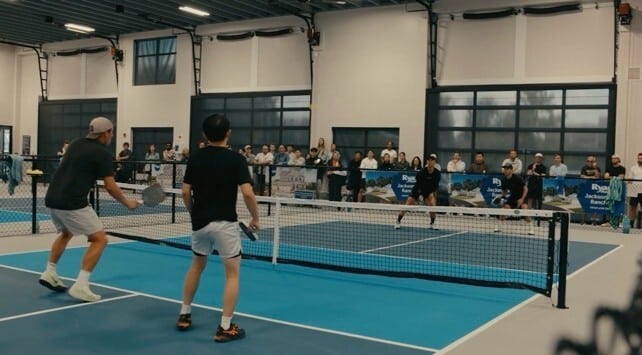
According to Maniago, one of the reasons the Carmel Classic stayed on schedule was the team matched division count to court availability. They built in buffer time to avoid cascading delays, which is a critical planning step many first-time operators underestimate.
2. Have clear communication.
In the tournament, Maniago made sure players knew where to show up, what time to be there, and even had in-tournament texts that told members which courts they needed to be at next. “That’s what they really appreciated,” said Maniago.
There was also clear communication within the team to make sure everything on their part ran smoothly.
3. Be intentional with sponsorships.
Maniago and his team were able to secure 11 sponsorships for the tournament. These sponsorships created half of the revenue for the tournament and allowed for cash prizes in each division. These sponsorships included banner ads on the fences of the courts, icons on the livestream for the main court, and gift bags for each player that included items from several brands.
He advised operators to make sure they follow through with what they promise sponsors, otherwise your reputation will be tarnished, making recurring revenue difficult the next year.

4. Find the right software and learn it.
The tournament team used pickleballbrackets.com to manage the registration, court assignments, team brackets and score entry. Having the right software allows for the whole tournament to run smoothly and makes it easier to fix issues that may arise.
5. Build your volunteer and staffing plan early.
Maniago emphasized that success wasn’t just about software — it was about people assigned to clear roles, including:
- Court allocation and scoring
- Score runners
- Social media/documentation
- Facility operations support
Having 6–7 volunteers plus dedicated operational leads prevented bottlenecks and allowed the tournament directors to focus on flow and problem-solving instead of logistics overload.
6. Think about player experience.
When planning the tournament, Maniago and his team thought about aspects of tournaments they had played in that they liked and worked for them. They used this to plan the structure of the tournament, how many divisions they had, and the cash prize.
“People are wanting more out of the tournaments now because there is such a higher demand,” said Maniago. “So, the quality and output matters to the players and also the brands.”
They made sure each match was on time and used referees strategically to ensure the ease of the tournament.
Instead of staffing every match with a ref, the team: deployed referees primarily for medal matches and open divisions, and used roaming refs during high-traffic blocks. This optimized staffing cost while protecting match integrity where stakes were highest.
With all these aspects, they were able to create a memorable experience for those playing.
“Seeing how big people’s smiles were — that was why we did it,” said Maniago.

7. Collect data during the event – not after.
Lastly, Maniago advised to collect data on the event while on site. Maniago tracked:
- Player count
- Spectators
- Social impressions
- Sponsor visibility
This allowed him to immediately begin planning a five-city tournament tour, backed by real metrics instead of estimates, making potential sponsorships and participation easier to come by.
For Maniago, the Carmel Classic proved that a successful pickleball tournament isn’t built on one big decision, but on hundreds of small, intentional ones — from court capacity and communication to sponsorship follow-through and player experience.
As tournaments become more competitive and player expectations continue to rise, operators who prioritize planning, data, staffing and experience will be the ones who stand out.

Jordan Meek is a staff writer for Pickleball Innovators, where she covers the rapidly evolving business of pickleball — from facility growth and technology to player experience and industry strategy. A graduate of Denison University with a degree in Journalism, she joined Peake Media in 2025 and brings a passion for storytelling and curiosity to every piece. Jordan is driven to spotlight the leaders shaping the sport and uncover insights that help operators thrive in the fastest-growing game in America. Reach her at jordan@peakemedia.com.