Alex Luscher, the director of operations at Ballers, explains how the Philadelphia facility combines pickleball, padel, golf simulators and a full restaurant under one roof, and what it takes to keep each offering thriving.
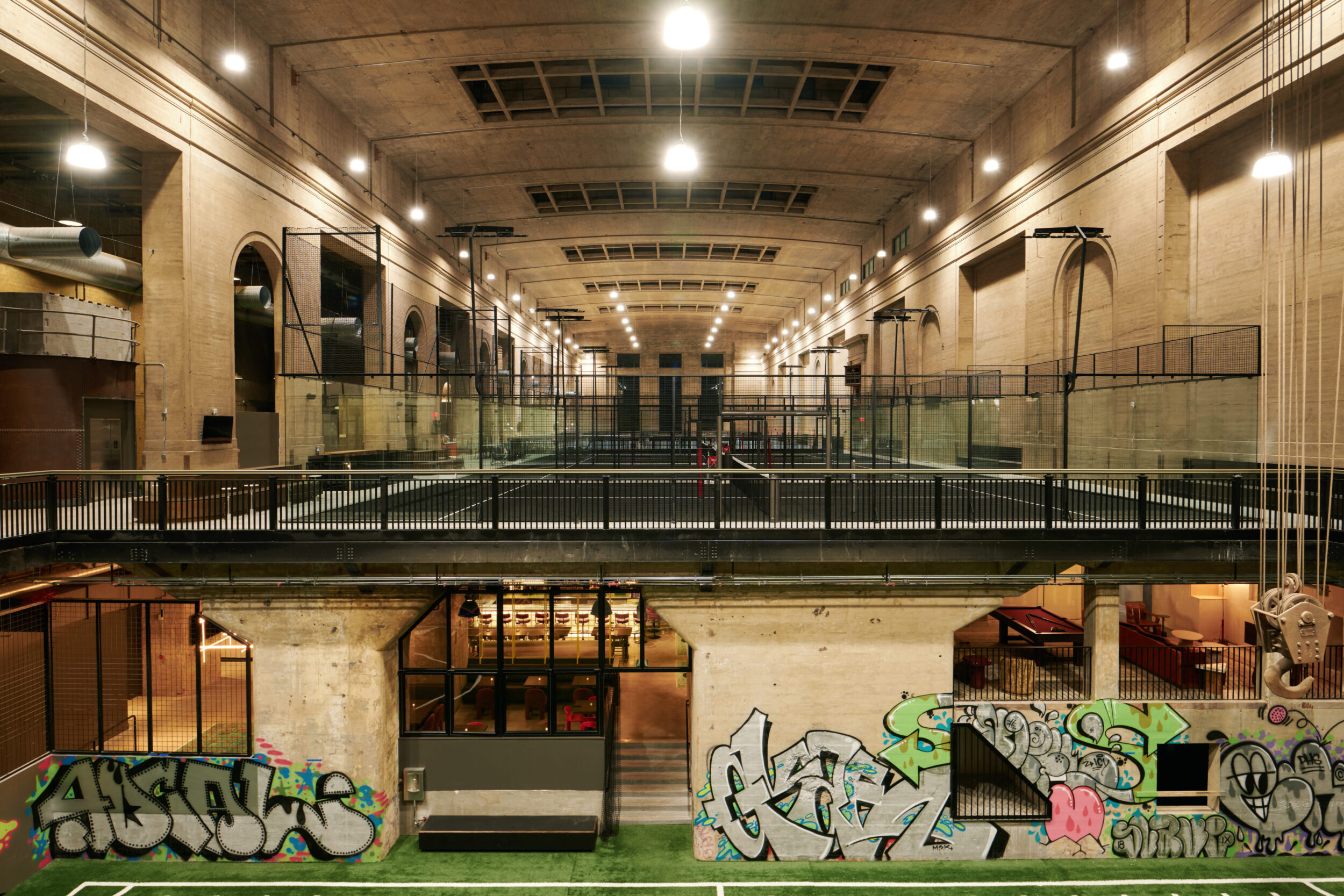
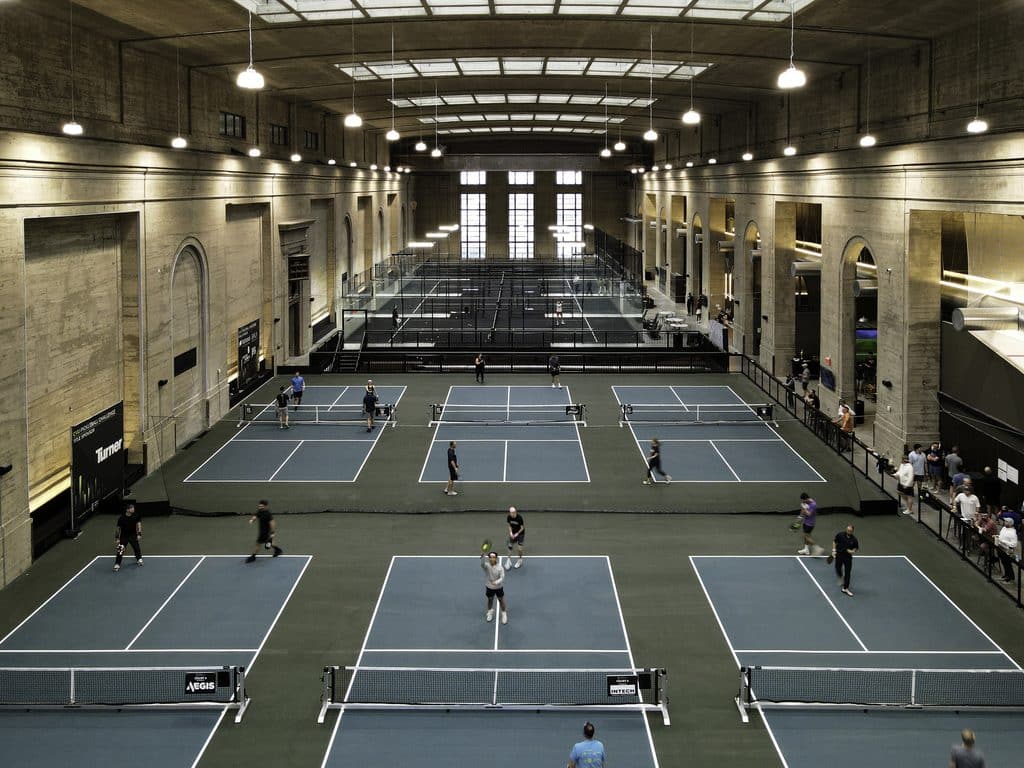
In a building with 50-foot ceilings, the possibilities for what can happen inside are almost as expansive as the space itself. A pickleball match can take place just steps away from a padel court, while golfers work on their swings in simulators and guests gather downstairs for a meal. On another day, the same space might become the setting for a large-scale gala or a birthday party with children running around on the turf.
At Ballers in Philadelphia, the variety is part of the experience. The sports and amenities may attract different audiences but bringing them together under one roof creates an environment where guests have more reasons to visit, spend time and return.
Ballers was created by club experts. Much of the team previously worked at Equinox, then advised on club concepts nationwide through Good City Studio and was hired to explore uses for a former turbine hall. The idea for a sports club emerged from that.
“The founders decided that they could do a sports club better than anybody else — not just advise on the use for somebody else, but actually do it themselves,” said Alex Luscher, the director of operations at Ballers.
The result is a sports and social destination that borrows the hospitality and elevated feel of a private club while remaining accessible to the broader Philadelphia community since it doesn’t require a membership.
Operating a multisport facility requires more than finding room for different activities. Each sport comes with its own physical requirements, programming needs and customer expectations.
“The architecture defines the use of space and then the specifics of each sport have their own requirements as well,” said Luscher.
Padel and pickleball— which require considerable overhead clearance — sit beneath the building’s 50-foot ceilings, while squash and golf simulators occupy the more modest 30-foot sections. The fitness area and restaurant are downstairs, where ceiling height or column spacing are more limiting. The arrangement allows each activity to operate in a space that suits it.
Ballers relies heavily on technology to coordinate its different business functions.
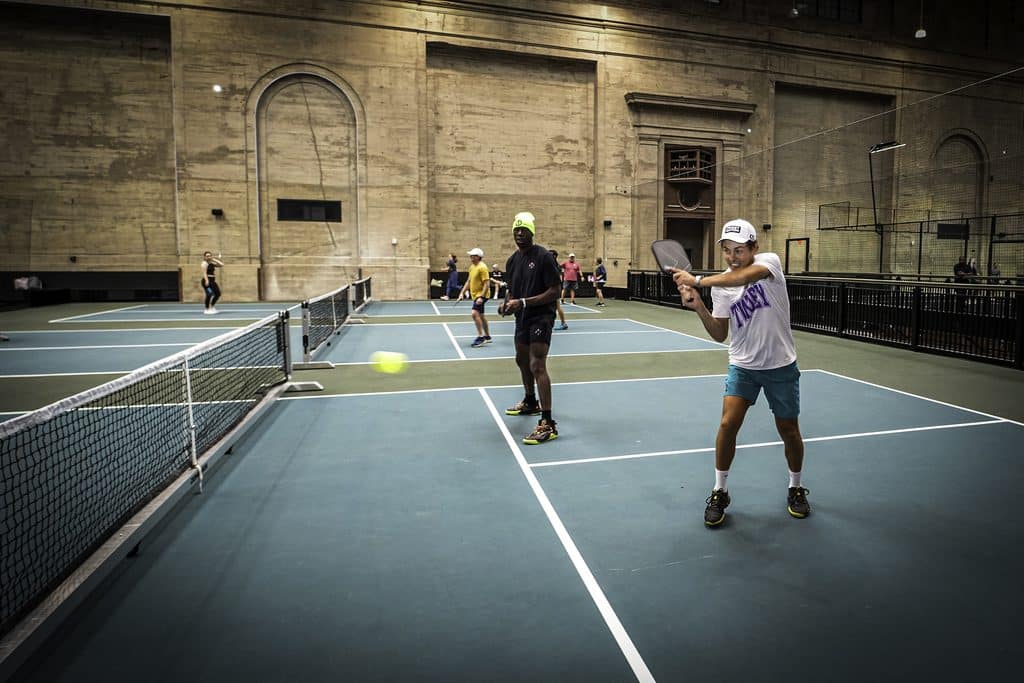
Each sport has its own programming formats and, in some cases, specialized platforms. For example, pickleball open play can take several forms from traditional rotation formats to ladder leagues. Padel programming has its own formats — including Mexicanos and Americanos — while squash requires a different approach altogether.
The same applies to the overall business. Event management, membership operations and restaurant transactions all have very specific requirements. Finding one platform that can handle everything has proven difficult. Instead, the team is focused on assembling technology that performs well in its specific area while still allowing information to move between systems.
“In the future, we’re looking for platforms with strong bridges” said Luscher.
A facility with multiple sports and hospitality components needs enough specialization to manage each department effectively, but it also needs a broader view of how guests interact with the business.
With guests arriving for different reasons, Luscher said one of the team’s biggest priorities is making sure the experience exceeds whatever initially brought someone through the door.
“We are hospitality first,” said Luscher. “So if you come to us with some sort of question or request or idea, we’re going to do everything we can to make it happen.”
That philosophy influences how the team approaches everyday interactions. Staff members listen to what players want and look for opportunities to accommodate requests, whether that means playing a particular song or recognizing a longtime community member with a birthday surprise.
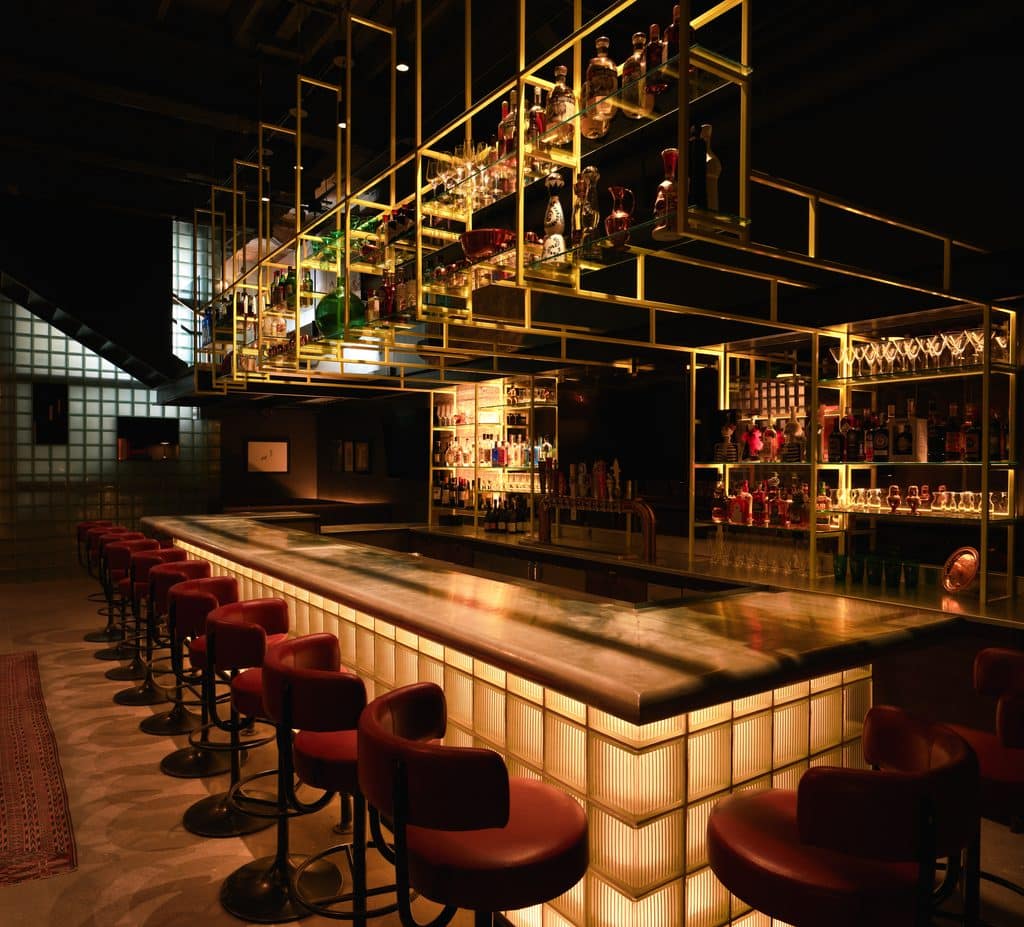
It also shapes the way Ballers approaches food and beverage. The restaurant is expected to stand on its own as a dining destination, rather than simply provide convenient food for people between games.
That commitment has extended to the restaurant’s own evolution. Originally operating as a tavern with a traditional menu of heavier comfort foods, the restaurant was reworked based on how guests actually used the facility. It is now Neon Record, a Mediterranean-inspired concept with a lighter menu and more protein-focused options.
The team also extended restaurant hours until 11 p.m. after realizing that players frequently wanted to stay and eat after finishing their court time at 10 p.m. For example, league nights and practices created opportunities for people to transition directly from competition into a social re-fueling session.
The restaurant therefore plays a role beyond generating another revenue stream. It gives guests a reason to extend their visit and creates another connection between the different parts of the facility.
One of the advantages of bringing multiple sports together is the ability to give guests something new to explore without requiring them to leave the building. Someone who initially comes in for golf might discover padel, while a pickleball player could eventually become interested in fitness or another activity.
Luscher has already seen members shift their attention between offerings depending on their interests and circumstances. A player might spend several months focused primarily on padel before transitioning to more golf during the winter.
“When they’re looking for more, we can always offer more,” said Luscher.
That flexibility creates opportunities to maintain engagement as interests change. However, keeping all of those options active presents its own challenge. Each offering requires a dedicated effort to develop its audience, and simply having the equipment or space available doesn’t guarantee participation.
“You have to have somebody who is passionate about it,” said Luscher. “If you have somebody who is just generally great, but they’re doing a bunch of things and they don’t really care about it, that one forgotten thing is not going to magically grow.”
He explained that building a successful program requires someone who understands the sport and is invested in bringing people together. That person needs to welcome newcomers, encourage participation and create opportunities for players to become part of a regular community.
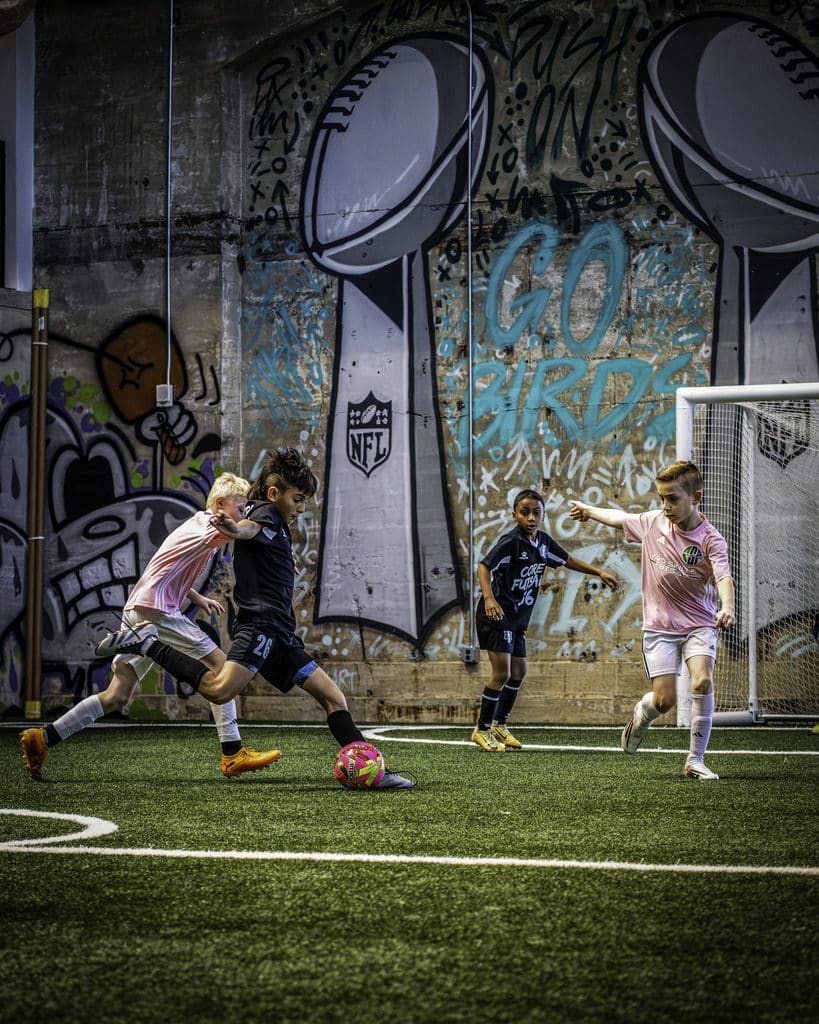
The staffing structure at Ballers reflects that need. The facility has dedicated leadership for pickleball, padel and golf, along with someone focused on soccer and the turf space.
The specialized approach is important because each community develops differently. A pickleball audience may organize around established groups of players, while another sport may require more education and hands-on outreach to introduce people to the activity.
Ballers has found that connecting with influential members of existing sports communities can help accelerate that process. In pickleball, for example, groups often choose a home facility together. Building a relationship with someone who already has credibility within that community can introduce an entire network of players to a new space.
Since the building is older and they offer so many activities, Luscher emphasized the importance of having preventative maintenance procedures in place before problems arise, along with a plan for addressing equipment failures when they do happen.
For technology-dependent activities such as golf simulation, downtime can quickly disrupt a guest’s experience. Ballers keeps backup parts on hand for critical equipment and makes sure multiple team members understand how to address common problems.
“If you can save the day within five minutes, you haven’t ruined their golf experience,” said Luscher. “You’ve presented a magic trick.”
The team also recognizes that not every problem can be fixed immediately. When something goes wrong, the way staff members respond can be just as important as the technical solution.
“If you just listen, acknowledge the problem, offer something of value to their experience, then you can pretty much get to the other side of just about anything,” said Luscher.
Ballers is still developing its Philadelphia operation, which has been open for just over a year, while preparing for expansion into other markets — including Chicago and Los Angeles. Each location will require a close look at its neighborhood, existing sports offerings and the available space, with the mix of courts, amenities and food and beverage adjusted accordingly.
The larger concept, however, remains rooted in the same idea that shaped the original Philadelphia facility. By combining sports with hospitality and giving each offering the attention it needs to succeed, Ballers is building a place that can serve different interests without making any one of them feel secondary.
Every additional offering brings another community to develop, another operational responsibility and another expectation to meet. But when those pieces are managed well, the variety becomes an advantage. Guests can arrive for one reason and find several more to come back for, while the experience between the activities gives them just as much reason to stay.

Jordan Meek is a staff writer for Pickleball Innovators, where she covers the rapidly evolving business of pickleball — from facility growth and technology to player experience and industry strategy. A graduate of Denison University with a degree in Journalism, she joined Peake Media in 2025 and brings a passion for storytelling and curiosity to every piece. Jordan is driven to spotlight the leaders shaping the sport and uncover insights that help operators thrive in the fastest-growing game in America. Reach her at jordan@peakemedia.com.