
Gotham Pickleball Club owner David Goldberg is opening his second New York facility — and sharing pickleball club expansion tips, and other insights for club operators.
When David Goldberg signed the lease on a second New York facility for Gotham Pickleball Club, he was quick to temper the congratulations.
“I didn’t do anything yet,” said Goldberg. “I wrote a large check for a security deposit and then invited a lot of potential pain and suffering.”
Anyone who has renovated or built a club from the ground up will relate to Goldberg’s sentiment. Projects like these are never easy, and Goldberg’s transparency regarding this fact is part of a growing trend of operators opening up about the challenges and triumphs of owning an indoor pickleball club.
To be clear, Goldberg has had many triumphs. He’s built a high-performing club in one of the most competitive and logistically demanding markets in the country. And with a new two-building complex underway, Goldberg sat down with Pickleball Innovators to share what he’s learned.
Here are the takeaways from the conversation.
1. Let demand lead. Don’t expand on ambition alone.
Goldberg didn’t decide to grow because he wanted a bigger footprint. He expanded because the data left him no choice. Gotham was running at 75% utilization across 21 hours a day, with wait lists stacking up in multiple programs.
“We’re turning members away,” explained Goldberg. “And we can’t offer the diversity of programming that we want to because of just the limitations of time and space.”
That utilization picture gave him confidence — not just enthusiasm — to commit to a second location. If you’re considering expansion, the question to ask first isn’t whether you want to grow. It’s whether your current facility is genuinely full.
2. Design for events and social experience — not just courts.
Gotham’s first facility is, by Goldberg’s own description, great for playing and not much else. A bench next to each court is the social infrastructure. It works, but it has real limits.
“We want people to be able to sit and relax, and socialize in a space that’s separate,” said Goldberg. “We want people to be able to sit outside. We want different spaces that feel different.”
The new facility was selected specifically for its non-court space — room to stage events, gather between sessions, and accommodate the kind of corporate team-building and tournament inquiries Goldberg has regularly had to redirect to other venues. He’s still not interested in running a restaurant or bar. But he wants a facility that can host people, not just players.
If you’re designing or evaluating a space, think beyond square footage per court. Where do people go when they’re not on the court?
3. Autonomous operations and high-touch service aren’t opposites.
Gotham is known as one of the earliest fully autonomous venues in the country — there are hours of operation with no staff on site at all. You might expect that to translate to a transactional, self-serve experience. It doesn’t.
“We’re actually an incredibly high-touch facility,” said Goldberg. “Our coaches are constantly engaging with customers. We try to be really responsive. Even though we don’t have a phone number, we’re really responsive over the chat, really responsive by email.”
Autonomy is a staffing and overhead decision. It doesn’t have to define your customer relationship. Goldberg plans to bring the same autonomous model to the new facility’s five-court building while maintaining the same level of programming depth and coaching engagement.
4. Suburban markets are getting harder to win in.
Goldberg is direct about where he sees the current landscape creating problems. Operators outside of dense urban cores are facing a compounding set of pressures that weren’t there even a year or two ago.
Municipal investment in free outdoor courts is accelerating. As he puts it, it’s great for the sport and terrible for venues trying to charge court fees. And the ease of building large facilities in suburban markets means that even first-mover advantage is fragile.
“It’s become really risky to build in the ‘burbs’ at the moment,” said Goldberg. “You might think you have the place to yourself, but five months from now someone can build a place that’s even bigger than yours, 10 minutes away.”
He’s not suggesting suburban markets are unwinnable — but he is saying that anyone entering or expanding in those markets needs to go in with eyes open about the competitive dynamics.
5. Talk to other operators. Do it early, do it often.
When he built Gotham’s first location, he didn’t know that reaching out to other operators was even an option.
“Go find other operators to talk to,” said Goldberg. “They will talk to you. They want to talk to you. They don’t want you to face the same mistakes that they did. Most of us just don’t compete with each other. We just want to grow the sport.”
The openness in this community is genuine. Goldberg described a recent informal meeting with an operator building a 10-court facility in Connecticut — comparing notes, sharing war stories, being honest about what’s hard. That kind of peer network has real value, and it’s available to anyone who reaches out.
Interested in networking with other operators? Apply to attend the 2026 Pickleball Innovators Summit, taking place October 12-14 in Tucson, Arizona.
6. Play pickleball. A lot. Everywhere.
Goldberg’s single most emphatic piece of advice for operators: play the sport you’re building a business around.
“I don’t have to put myself in the shoes of my customers because I essentially am my own customer,” said Goldberg. “I’m a typical 3.5 tournament player and I struggle with all the same things that everybody else does. If you’re not playing, I don’t know how you figure that out.”
And don’t just play at your own facility. He recommends playing in tournaments, visiting other clubs, and staying genuinely immersed in the player experience. The programming insights, the frustrations, the gaps — they reveal themselves on the court in ways they never will behind a desk.
If you’re operating but not playing, he’s straightforward about it: hire someone who does and consult them heavily. But his clear preference is for operators to be players first.
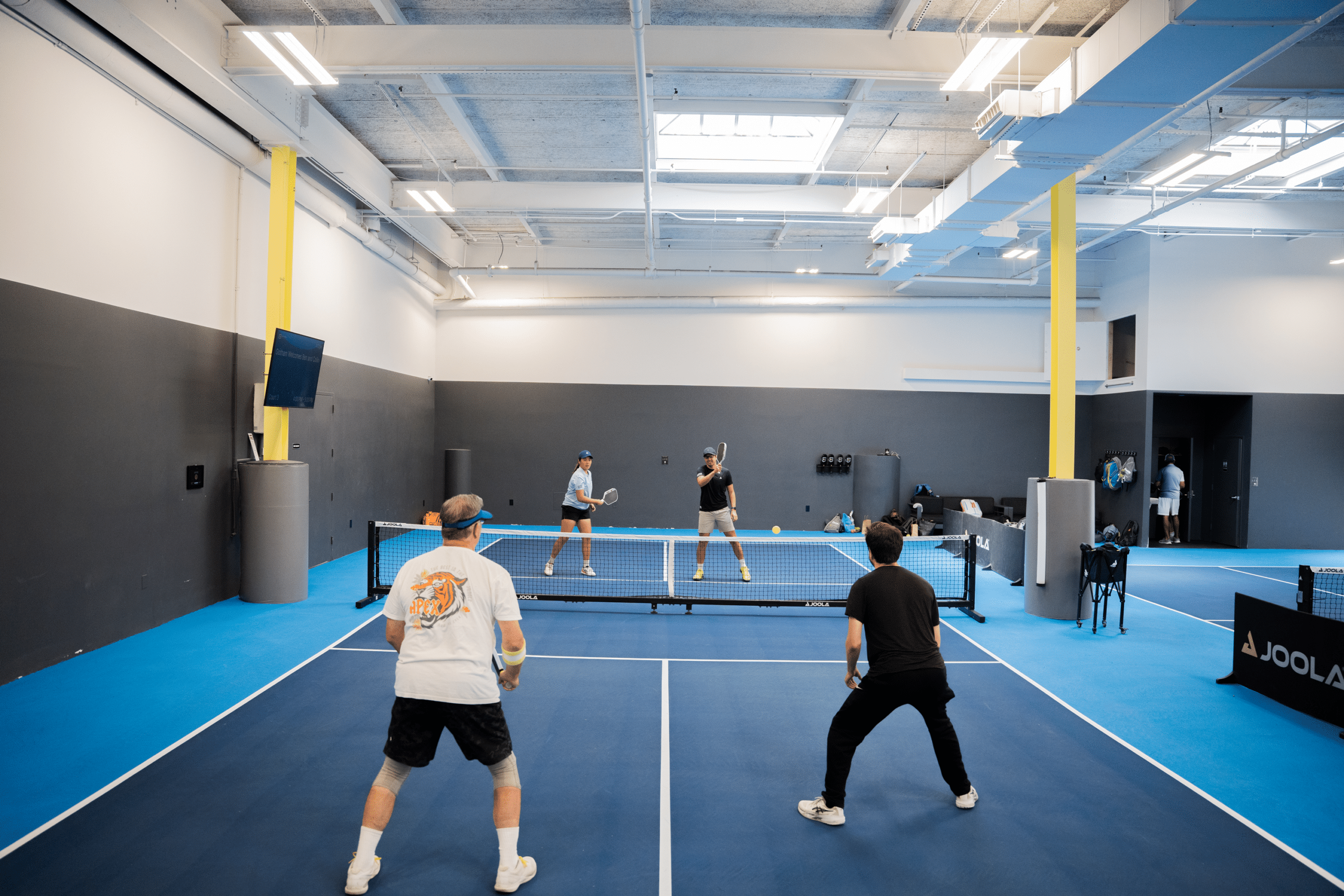
Gotham Pickleball Club’s second New York facility is expected to open later this year, and will span across two buildings — five indoor courts, a covered outdoor courtyard space, and a dedicated championship court — along with expanded event and social space operating under the same membership structure as the original location.

With over a decade spent covering the business side of sports and fitness, Rachel Chonko brings a wealth of experience and a true passion for active communities to Peake Media. As Editor-in-Chief, she’s focused on helping pickleball clubs and fitness facilities thrive, from guiding growth strategies to showcasing the latest industry trends. Rachel also hosts the Club Solutions Magazine Podcast, where she interviews leaders in fitness and pickleball to share insights and success stories with the wider community to give her listeners a competitive edge.
After taking up pickleball herself, Rachel has come to appreciate the sport’s unique blend of social connection and active living — a mix that’s perfectly in line with her editorial philosophy. Connect with her on LinkedIn, or check out her articles below for a deep dive into the energy and culture driving pickleball’s rapid rise.