
When Patrick Roche and his wife, Ashley, first explored opening a tennis club nearly a decade ago, the numbers didn’t add up. It would’ve been a long road to profitability and the idea was shelved. But the COVID-19 pandemic surge in pickleball changed that.
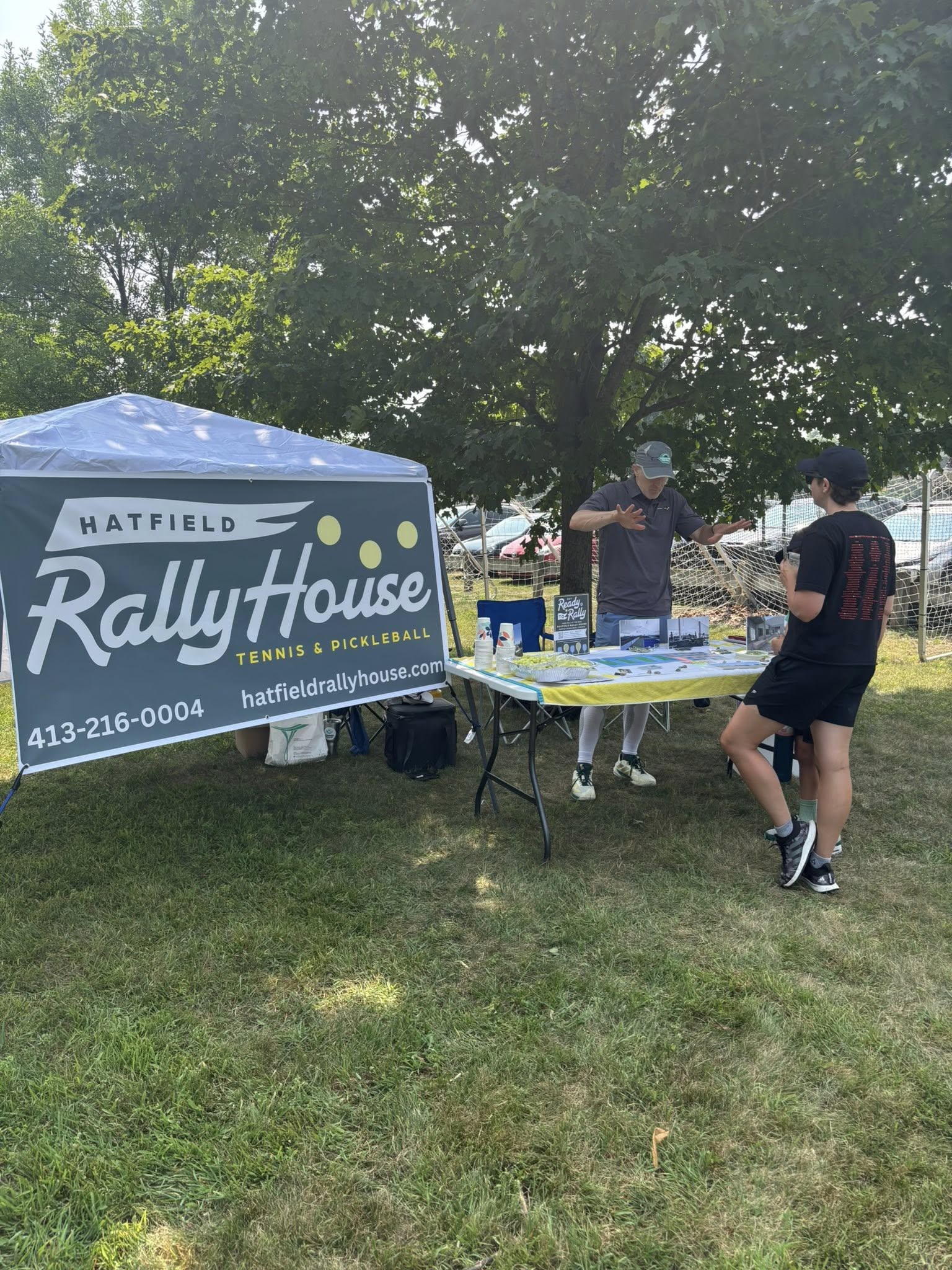
By 2022, the couple revisited the concept with a new lens — combining pickleball and tennis into one facility specifically designed for connection. The result is Hatfield Rally House in Hatfield, Massachusetts, a hybrid racquet sports venue that officially opened in early 2026.
Just a few months into operations, Hatfield is already carving out a distinct identity in a rapidly crowding market, built on intentional design, programming and a deeply rooted community ethos.
Bridging the Gap
At its core, Hatfield’s biggest differentiator is how it bridges the two racquet sports that tend to stay the most separate.
The facility features eight dedicated pickleball courts and four tennis courts, separated by a central lounge that acts as both a buffer and a connector. The design solves a practical issue — noise complaints from tennis players — while still encouraging interaction between the two groups.
“We wanted the sound separation but also, the ability to see out onto both courts,” said Roche. “You’ll see pickleball people sitting down looking out into the tennis courts, and tennis people sitting at the window knocking to say hi.”
The deliberate design choice is part of their larger strategic goal to reduce friction between the groups while fostering a shared identity. It shows that the layout isn’t just about efficiency but a way to actively shape culture.
The lounge itself reinforces that. With a mezzanine, flexible multi-purpose space and sightlines to both court areas, it becomes a natural gathering point. Add in a grab-and-go cafe, patio space and planned outdoor amenities like bocce and beach courts, and the venue starts to resemble a social hub as much as a sports facility.
Cross-Sport by Design
Hatfield’s programming strategy mirrors its physical design, focused on crossover and inclusivity rather than segmentation.
From beginner clinics to advanced sessions and intensity drills, the facility caters to a wide range of skill levels. But more notably, it introduces hybrid experiences designed to blur sport-specific boundaries. Events like racquet sport “triathlons” and the inclusion of spec tennis — a hybrid of tennis and pickleball — encourage experimentation and shared participation.
“We want to have opportunities to do that,” said Roche. “Encourage crossover between the sports, tennis players to try pickleball, pickleball players to try tennis.”
Even themed events — like a Pi Day program done recently — span across all courts and structured to mix audiences rather than isolate them, demonstrating how programming can function as a unifying mechanism to broaden engagement across their member base.
A Community Center First
A defining aspect of Hatfield is its positioning as a community space rather than a transactional sports venue.
“It was her real dream to make this like a community center,” said Roche about his wife, Ashley. “A place where pickleball and tennis players get together and everybody’s apart of the same group.”
That vision extends beyond the sport. The facility’s multipurpose room is open to local organizations for everything from meetings to classes, reinforcing its identity as a neighborhood hub rather than a members-only sports club.
That community-first approach also shapes future plans, including social programming, expanded outdoor amenities, and even a potential beer and wine offering to encourage members to linger and connect.
Pricing Education
While the vision is compelling, the operational reality has come with challenges, particularly around customer expectations.
One of the biggest hurdles, according to Roche, has been educating pickleball players on pricing models.
“Many haven’t had to pay to play inside,” said Roche. “When we tell them you still have to pay for your court time, at first they couldn’t wrap their head around that.”
To help with that disconnect, operators need to manage a shift in the consumer mindset, especially as there are more indoor facilities opening than outdoor public options.
Hatfield has approached this by emphasizing value through programming, community and amenities while maintaining transparency around costs. Roche acknowledges the tension many operators face — staying affordable while running a profitable business — and argues that pricing strategy must be paired with clear communication and value.
Lessons from the Build
Beyond high-level strategy, Roche pointed to several lessons from the build and launch process. Lighting, for example, proved more complex than expected.“Don’t assume your architect knows how to do it,” he advised. “You have to explain glare, height, what can’t be right in people’s eyes.”
Staffing was another critical factor. Hiring experienced pros with strong personalities and existing followings helped jumpstart programming and community engagement.
Equally important was operational clarity. “Get your policies in place as soon as you can,” said Roche. “The more people you can have look at it, the better.”
These lessons show how success in this industry isn’t just about vision, but also about execution at every level, from construction details to communication.
Despite opening into a market that has quickly become more competitive as other facilities are launching nearby, Hatfield is confident in its positioning.
Roche pointed to the strength of the local player base and the potential for collaboration, including inter-facility leagues modeled after tennis systems, signaling a willingness to view competitors as partners rather than threats.
Playing the Long Game
Looking ahead the focus of the club remains on steady and sustainable growth — expanding programming, enhancing the member experience and gradually adding amenities without overextending.
The goal of the club, as Roche put it, is to build “a space where pickleball and tennis can thrive together as a community — a home away from home.”
Hatfield Rally House offers just one example of how intentionality can really set a facility apart. As competition increases and the novelty of the sport fades, operators who have built genuine community infrastructure through thoughtful design, programming and culture, may find that is their most durable competitive advantage.

Jordan Meek is a staff writer for Pickleball Innovators, where she covers the rapidly evolving business of pickleball — from facility growth and technology to player experience and industry strategy. A graduate of Denison University with a degree in Journalism, she joined Peake Media in 2025 and brings a passion for storytelling and curiosity to every piece. Jordan is driven to spotlight the leaders shaping the sport and uncover insights that help operators thrive in the fastest-growing game in America.