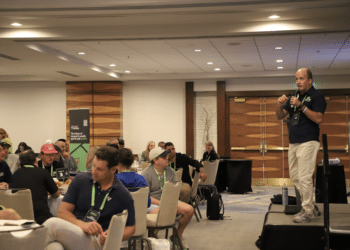

Boston Pickle Club’s New England Tournament Series is growing 25–30% per event. Here’s how they built a pickleball tournament series that drives membership and community.
For many pickleball clubs, tournaments are a one-off event. For Boston Pickle Club, they’re a system.
BPC’s New England Tournament Series — NETS — is a six-event, year-long super regional tournament series running every other month, and it’s become one of the club’s most effective tools for member acquisition, brand building and community development.
Three legs in, the series is growing by 25 to 30 percent with each event, with the January tournament drawing 225 players across 11 divisions over three days.
Building the Experience
What separates NETS from a standard club tournament is the attention to the off-court experience. BPC works with roughly a dozen local corporate partners to bring complimentary food, drinks and gear sales on site. Players receive a complimentary Lululemon gift bag loaded with promotional items. Other onsite amenities like a free stretch and massage station, a smoothie bar and cornhole are available throughout the event. And for the medal rounds and finals, BPC brings in a referee — a detail that may seem small but has proven to be a meaningful differentiator in the New England market.
“You just get a feeling that you played in something a little bit more official,” said Mike Wilmot, the chief growth officer at BPC. “It also takes some of the variability on calls out of the hands of the players.”
For many participants in lower-level divisions, it’s their first experience playing with refs at all — a deliberate choice by BPC to introduce players to what Wilmot calls “real competitive pickleball.”
The club also records finals matches and posts them on their YouTube channel, making footage accessible for players and spectators alike. In a market where high-level pickleball isn’t always easy to find, Wilmot sees the footage as both a marketing asset and a development tool for players looking to study the game.
A Grassroots Marketing Shift
Early on, BPC leaned on paid channels to drive awareness and registrations. For the most recent event, they pulled back on that spending almost entirely, replacing it with a ground-up approach centered on player influencers and early registration incentives.
“We decided this time to do no paid except for what we do with Pickleball Brackets, and do it all with what we refer to as more ground up marketing — trying to find key influencers across all the different groups that would potentially participate, particularly the better players,” explained Wilmot.
The strategy involves identifying key players in the community — especially the more competitive ones who tend to move between venues based on where their peers are playing — and motivating them to bring their groups. Incentives like discounted registrations or free entries for players who recruit a certain number of participants have proven effective.
BPC also starts marketing the next event before the current one ends, placing QR codes in gift bags to drive early signups on site. Getting a critical mass of registrants in the first two weeks, Wilmot explained, creates a visibility advantage on Pickleball Brackets.
“When people are sniffing around Pickleball Brackets and they see that this tournament has 50 people already, they look at it because they’re like, OK, what’s going on here,” said Wilmot. “It’ll definitely be big enough for me. I’ll be able to find good competition and all that.”
DUPR as a Selling Point
With the exception of the Open and Moneyball divisions, NETS runs entirely on DUPR ratings — and BPC has leaned into that as a selling point, particularly for developing players.
“There are tons of people out there with an underdeveloped DUPR who don’t know how to build their DUPR,” said Wilmot. “You’re going to have six guaranteed matches against people at your level. You can make a massive jump in your DUPR and or at least get it to a point where it’s more reliable.”
Member Acquisition and What’s Next
While repeat tournament participation could be higher — something Wilmot attributes to busy schedules more than lack of interest — NETS has proven effective at introducing new players to the club.
“It’s a great member acquisition strategy for us for people that haven’t been to the club before,” said Wilmot. “‘Because they’re seeing it full and they’re seeing it well run and they’re having fun.”
More recently, Leg 4 in late March had just over 200 players and saw great participation in some ‘non-core’ divisions like singles, split age and mixed doubles.
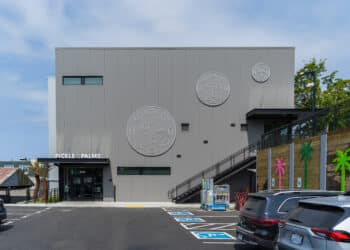
As player growth continues to grow, simultaneously running the NETS tournament across their two club sites in Norwell and Hyde Park would open up new possibilities for format and scale.
For operators considering a similar approach, Wilmot’s advice centers on two things: know your community well enough to identify the right ambassadors, and invest in the off-court experience just as much as the on-court product.
“Making sure that the experience they have off the court while they’re there is as good as it can be,” said Wilmot. “I think you leave with a smile on your face because you got a slice of free pizza or have a gift bag that you’re walking out with. And I think that goes a long way.”


Prefer to listen? The full interview can be found on SoundCloud, Apple Podcasts and Spotify.

With over a decade spent covering the business side of sports and fitness, Rachel Chonko brings a wealth of experience and a true passion for active communities to Peake Media. As Editor-in-Chief, she’s focused on helping pickleball clubs and fitness facilities thrive, from guiding growth strategies to showcasing the latest industry trends. Rachel also hosts the Club Solutions Magazine Podcast, where she interviews leaders in fitness and pickleball to share insights and success stories with the wider community to give her listeners a competitive edge.
After taking up pickleball herself, Rachel has come to appreciate the sport’s unique blend of social connection and active living — a mix that’s perfectly in line with her editorial philosophy. Connect with her on LinkedIn, or check out her articles below for a deep dive into the energy and culture driving pickleball’s rapid rise.