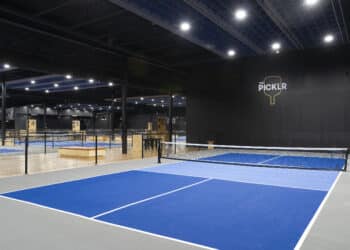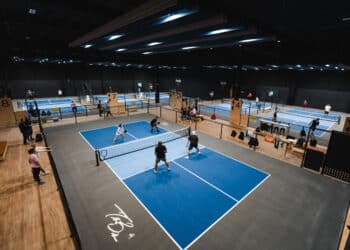


As pickleball clubs continue to scale across the U.S., the most successful operators are realizing something important: pickleball alone isn’t enough. Members are looking for experiences that support longevity, performance, recovery and connection — not just court time.
Each year, the American College of Sports Medicine (ACSM) releases its Worldwide Fitness Trends report, surveying more than 2,000 fitness professionals globally. While the list isn’t pickleball-specific, the 2026 trends offer powerful insights for club owners looking to improve retention, increase secondary revenue and future-proof their business.
Here’s how the top fitness trends for 2026 directly apply to pickleball clubs, and how operators can leverage them.
1. Wearable Technology
Wearable technology remains the No. 1 trend for 2026, and pickleball players are already using it — tracking heart rate, steps, recovery and performance.
Pickleball operators can lean into wearables by offering performance assessments, recovery recommendations or coach-led clinics that help players interpret their data. This opens the door to add-on services like training sessions, performance coaching or recovery programming — all tied directly to improving on-court play.
2. Fitness Programs for Older Adults (Active Aging)
A large percentage of pickleball players fall into the active aging category, making this trend especially relevant. Strength, balance and mobility are essential for staying competitive — and injury-free — on the court.
Pickleball clubs that offer off-court conditioning, balance classes or strength programs tailored to pickleball players can extend member longevity and reduce churn. These programs also create new revenue streams beyond court reservations.
3. Exercise for Weight Management
With the rise of GLP-1 medications, more adults are focusing on sustainable health rather than extreme fitness goals. Exercise is still critical for strength, bone density and overall performance.
Don’t be afraid to position your club as a holistic wellness destination, not just a place to play. Conditioning programs, beginner-friendly fitness options and lifestyle-focused messaging help members see your club as part of their long-term health journey — not a seasonal hobby.
4. Mobile Exercise Apps
Fitness apps continue to grow, especially among younger, tech-forward audiences — an increasingly important demographic for pickleball’s future.
Apps can complement your pickleball club experience through skill tracking, drills, league communication or recovery guidance, and of course, court booking and membership management. Rather than competing with digital tools, smart operators can use them to extend engagement beyond the court.
5. Balance, Flow and Core Strength
Balance, mobility and core strength are foundational for pickleball performance — especially for quick lateral movement and injury prevention.
Offering yoga, mobility or core-focused classes designed specifically for pickleball players can improve on-court confidence and keep members playing longer. These formats also attract players who may not want traditional gym workouts.
6. Exercise for Mental Health
More than 75% of exercisers now cite mental and emotional well-being as their top reason for staying active — and pickleball already excels here.
Lean into pickleball’s social and stress-reducing benefits. Creating welcoming spaces, leagues, clinics and social events reinforces emotional connection — a key driver of membership retention.
7. Traditional Strength Training
Strength training remains underutilized nationwide, yet it’s one of the best tools for improving pickleball performance and preventing injury.
Even small-scale strength offerings — like warm-up circuits, strength-for-pickleball workshops or small group training — can dramatically increase player confidence and reduce downtime from injuries. In addition, some clubs are even incorporating gyms with traditional strength equipment into their spaces to cater to members looking to improve in this area.
8. Data-Driven Technology
Players care about improvement, and data helps validate progress. Wearables, video analysis and performance metrics are becoming more mainstream.
Again, clubs that help players interpret data — rather than just collect it — position themselves as performance partners. This supports premium offerings like clinics, coaching and assessment-based memberships.
9. Adult Recreation and Social Sport
New to ACSM’s Top 10, this trend perfectly aligns with pickleball’s rise. Adults are seeking social, competitive and fun ways to stay active.
Pickleball clubs sit at the center of this trend. Emphasizing leagues, ladders, tournaments and social play strengthens community ties and differentiates your club from traditional gyms.
10. Functional Fitness Training
Functional training supports real-world movement — exactly what pickleball players need for agility, endurance and power.
Functional fitness programs tailored to pickleball movements can be offered on or off the court, with minimal equipment. These programs enhance performance while creating non-court-based revenue.
The Bigger Takeaway for Pickleball Club Owners
The 2026 fitness trends reinforce a clear message: successful pickleball clubs are evolving into wellness ecosystems.
Clubs that integrate performance, recovery, social connection and data-driven insights will:
- Keep members playing longer
- Reduce injury-related attrition
- Increase secondary revenue
- Differentiate in increasingly competitive markets
Pickleball may be the entry point, but the future belongs to clubs that support the whole player, on and off the court.

With over a decade spent covering the business side of sports and fitness, Rachel Chonko brings a wealth of experience and a true passion for active communities to Peake Media. As Editor-in-Chief, she’s focused on helping pickleball clubs and fitness facilities thrive, from guiding growth strategies to showcasing the latest industry trends. Rachel also hosts the Club Solutions Magazine Podcast, where she interviews leaders in fitness and pickleball to share insights and success stories with the wider community to give her listeners a competitive edge.
After taking up pickleball herself, Rachel has come to appreciate the sport’s unique blend of social connection and active living — a mix that’s perfectly in line with her editorial philosophy. Connect with her on LinkedIn, or check out her articles below for a deep dive into the energy and culture driving pickleball’s rapid rise.