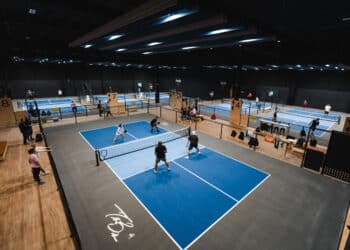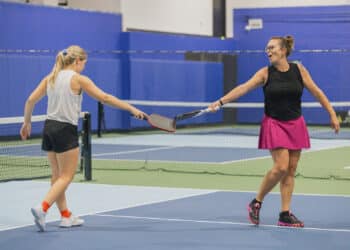
When Smash Dink Pickleball opened its doors in Glendale in November 2024, Los Angeles had only one indoor pickleball court. Over a year later, the city’s indoor landscape has grown, but Smash Dink has carved out a distinct identity that isn’t built on exclusivity or prestige. Instead, it’s built on the simple promise that everyone deserves a place to play.
Founder Carolina Marvin didn’t set out to build just another indoor facility. She set out to correct what she felt was a growing problem in the pickleball world. “I didn’t like the direction that I thought pickleball was going in, where there’s these big clubs and it becomes exclusive,” she said. “To me, pickleball is the antithesis of that. It’s about inclusivity.”
Her vision was straightforward — community first, pickleball second, with the sport serving as the vehicle for connection and belonging.
A New Kind of Membership — or Lack of One
One of Smash Dink’s departures from industry norms is its refusal to adopt the traditional membership model. Instead, the club offers open access where anyone can walk in and play and frequent visitors can opt for a no-commitment monthly pass.
The goal was accessibility, both financially and culturally. “We just wanted everybody to be able to play here and not have to make a massive financial commitment,” said Lauren Ellis, the co-owner of Smash Dink.
The philosophy has resonated. The club now has over 8,000 players registered through Court Reserve and the demographic spans all ages — something they consider a point of pride.
Building a Culture of Community
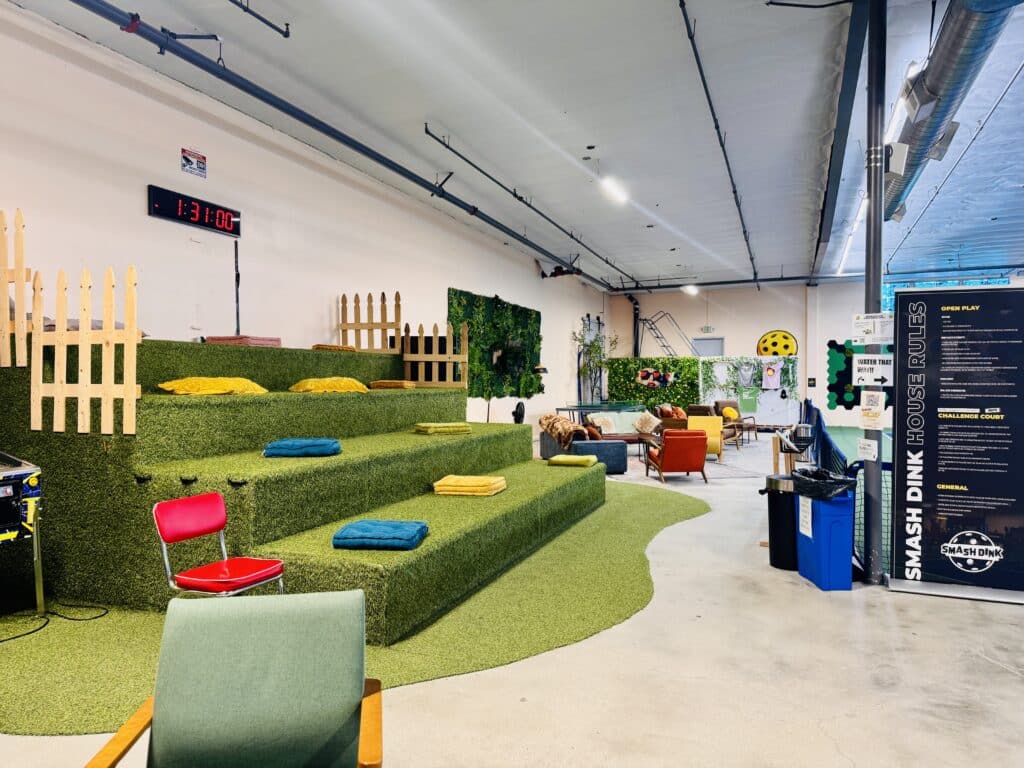
If Smash Dink has a single mantra, it’s printed right by the courts: “No assholes.”
Enforcing the culture is a deliberate choice. “We really try to maintain a welcoming atmosphere,” said Ellis. “It’s really easy for the vibe to be killed by a single player or a small group of people.”
The community responds strongly to that protective stance. Players consistently tell the owners that the club is a great place to hang out and there’s no pressure.
As the community grew, Smash Dink quickly learned that structure was essential, leading to a deliberately hands-on approach. “When we left players to their own devices, it kind of backfired a little bit,” said Ellis.
Now the club emphasizes clear guidelines, including wristbands, level-restricted events and consistently enforced expectations. “People really appreciate that,” she said.
Marvin sees structure as a kind of customer service — an invisible guardrail ensuring fair play. “We take all of that frustration away from the customer and we just do it,” she said. “Everybody just shows up. They know what to expect and they’re not going to deal with any of that BS.”
Programming Beyond Open Play
While outdoor California pickleball has long revolved around open play, Smash Dink is pushing its community to explore new formats. Ellis has introduced ladder leagues, round-robin formats, crazy eights, three amigos and DUPR-rated open play to ensure more accurate skill matching. It’s part experimentation, part education.
“We try to implement a lot of fun programming that you don’t typically see at an outdoor court,” said Ellis. Crucially, the programming is community driven. “If people ask for a women’s event, we’ll put it in the calendar. We’re really open to that kind of stuff.”
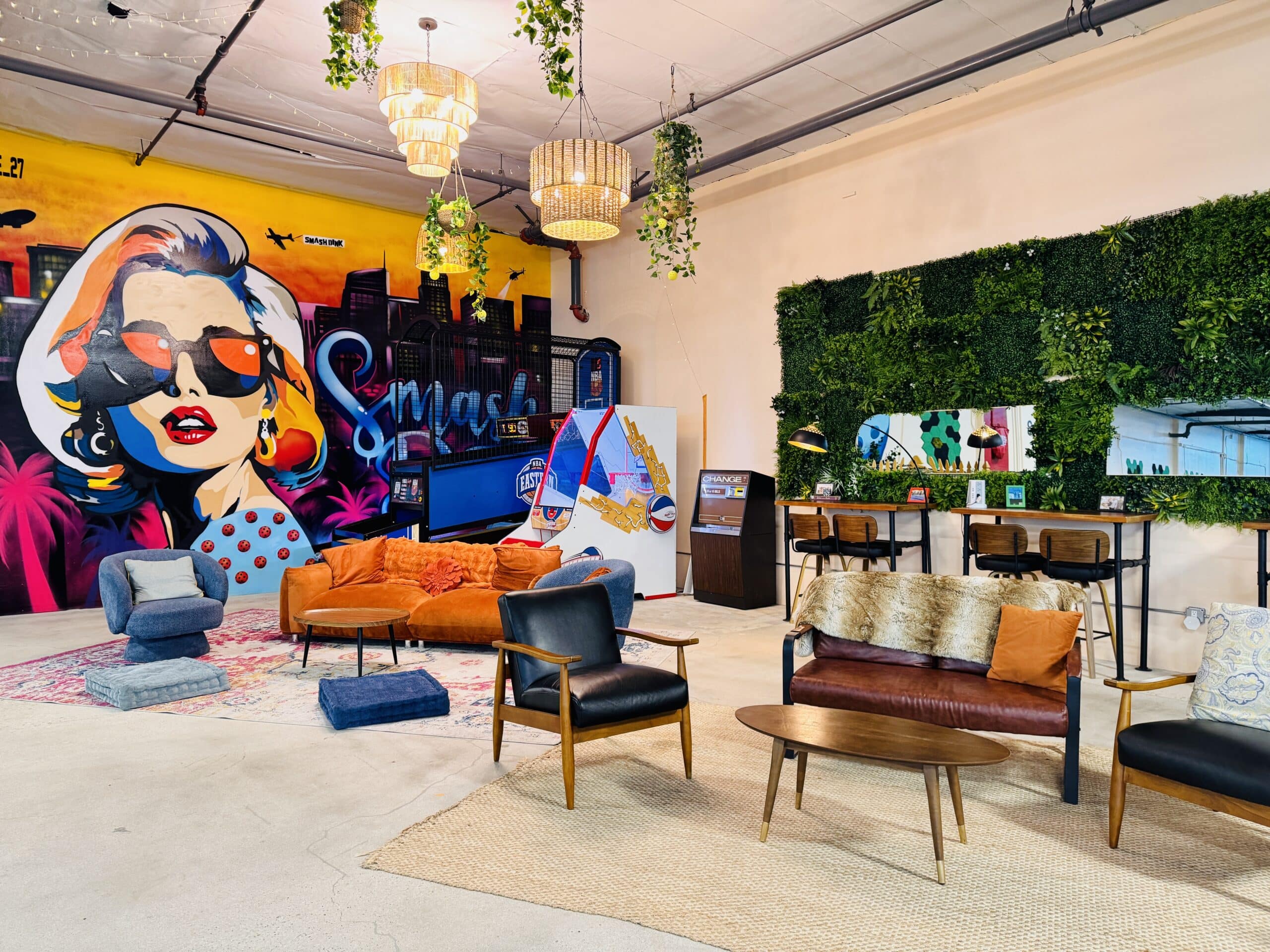
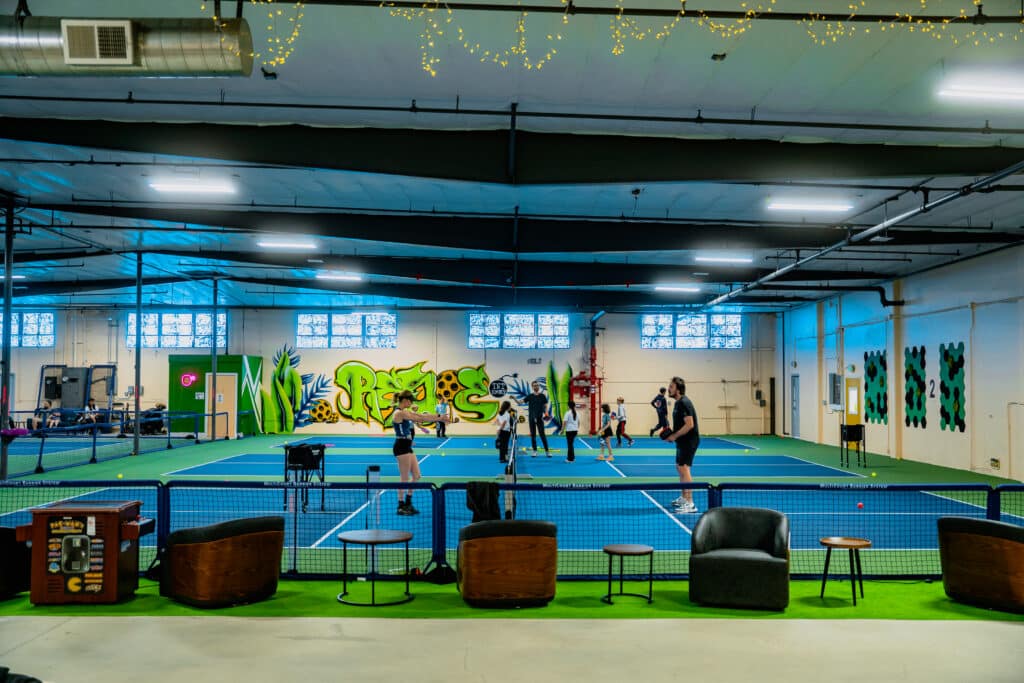
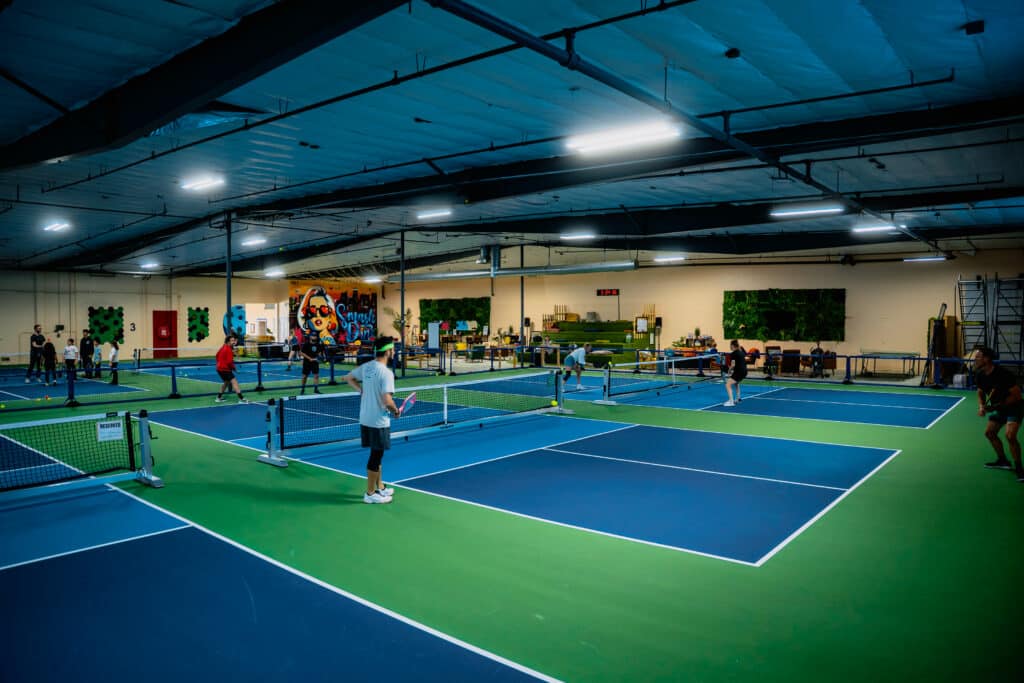
The facility supports flexibility with six indoor courts, expansive lounge areas, free lockers, a stocked pro shop, and soon, a bar.
Private events have become another surprise pillar of the club, ranging from birthdays and baby showers to bachelor parties. Corporate groups request mini-tournaments and weekends routinely fill with multiple events slotted carefully between open play blocks.
Why Smash Dink Exists
Long before Smash Dink became a physical space, Marvin was a frustrated player at a local park where getting court time had become increasingly hard. “It became kind of cliquey,” she said.
Limited courts created a system where certain players secured all available slots, leaving many locked out.
Marvin realized the city wasn’t keeping up. “Los Angeles is lagging behind,” she said, noting that nearby municipalities like Glendale and Burbank were doing far more to add courts. So, she decided to act.
She took what she deemed as a massive financial risk and began to look for locations and ultimately landed in Glendale. She wanted something that Los Angeles didn’t have — a low-cost, low-barrier indoor pickleball facility designed for social connection.
The payoff is visible every day. “I think the biggest success is that our community exists,” said Marvin. “For people to meet one another, for people to form bonds and enjoy life together.”
The Future of Smash Dink
Both Ellis and Marvin emphasize one lesson for operators, which is to define your structure early. “Setting expectations and having a structure that you follow pretty strictly is essential,” said Ellis.
Marvin added that operators must be prepared for some pushback when implementing structure but urged them to stand firm. Once people experience how much that structure prevents common issues that arise when players are left to self-manage, they tend to appreciate it.
For operators watching the sport evolve — and in some markets tilt toward a more exclusive member base — Smash Dink offers a different approach. Marvin’s belief that “you’re a member if you show up” has translated into a broad, multigenerational player base and culture that reinforces itself.
With ongoing improvements planned for lighting, sound and social offerings, Smash Dink’s trajectory demonstrates that community-first models can scale when paired with structure and operational guardrails. In that sense, the club’s ethos of “pickleball for the people” isn’t just a slogan, but a strategic operating model.




Jordan Meek is a staff writer for Pickleball Innovators, where she covers the rapidly evolving business of pickleball — from facility growth and technology to player experience and industry strategy. A graduate of Denison University with a degree in Journalism, she joined Peake Media in 2025 and brings a passion for storytelling and curiosity to every piece. Jordan is driven to spotlight the leaders shaping the sport and uncover insights that help operators thrive in the fastest-growing game in America. Reach her at jordan@peakemedia.com.