Inside St. Pete Athletic, the 50,000-square-foot pickleball club built around community instead of exclusivity.
When Reuben Pressman left the company he had spent a decade building in higher education technology, he expected to take some time off and figure out what came next.
That lasted about two weeks.
By then, pickleball had already become something of an obsession. Pressman was playing constantly, competing in tournaments and spending enough time at St. Petersburg’s Crescent Lake courts to understand both what made the local pickleball scene special and what it was missing.
Crescent Lake was one of the places where St. Petersburg’s pickleball culture had taken root. The public courts had developed a reputation well beyond the city, attracting high-level players and professionals. But even in a city that ranked near the top nationally for courts per capita, players could wait more than two hours to get on one.
For Pressman and his eventual business partner Graham D’Amico, the observation was simple: St. Pete needed more courts. Then came the bigger opportunity.
The city had high-end country clubs and established private clubs, but Pressman saw a gap between those traditional institutions and the kind of modern, accessible social environment that was emerging around pickleball. Coming out of the COVID-19 pandemic, people were also looking for something that went beyond recreation — a place where they could spend time, meet people and feel connected.
That is exactly what St. Pete Athletic was created for. Another place to play and a new kind of place to belong.
“We were in need of more accessibility but still luxury,” said Pressman. “Not from like materials goods luxury, but from the experience side of luxury. St. Pete was in need for that type of experience built around a real community that was accessible.”
The balance between accessibility and luxury is central to understanding St. Pete Athletic.
The club isn’t trying to be the cheapest place in town to play pickleball. Nor is it trying to replicate the traditional country club model with a high barrier to entry. Instead, it has built a sprawling athletic and hospitality concept around an idea that is fundamental to pickleball itself: People should be able to walk in, find a game, have fun and eventually become part of something larger.
Inside the Facility
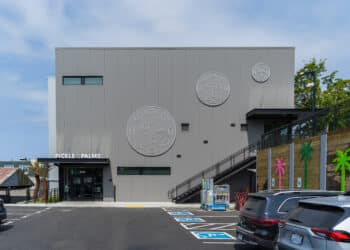
The result is a 50,000-square-foot facility that bears little resemblance to a traditional pickleball venue.
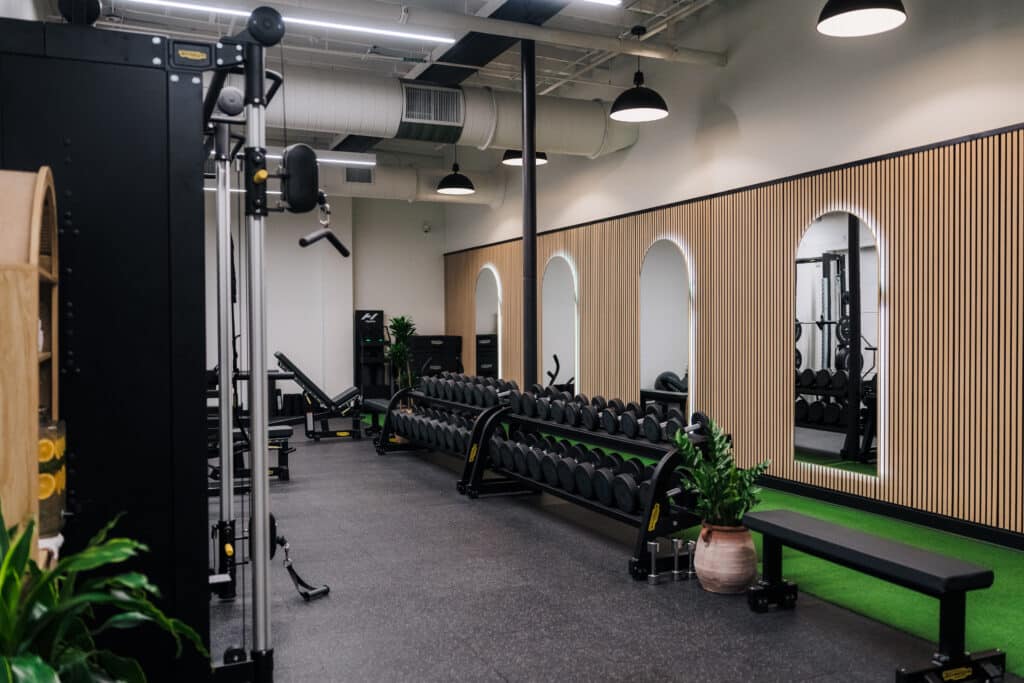
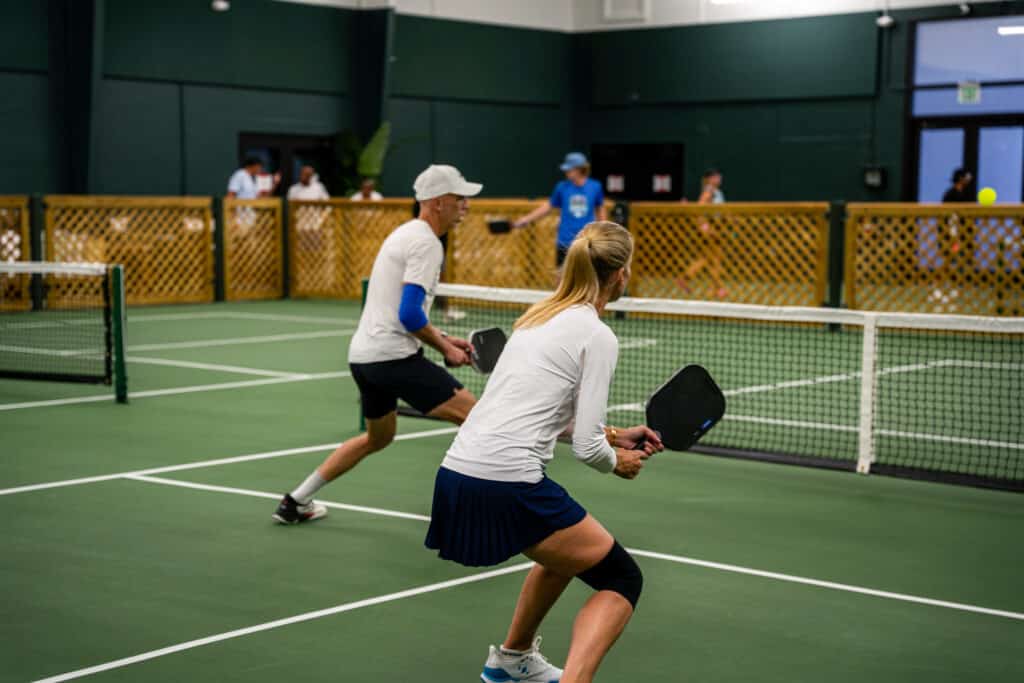
There are 14 pickleball courts along with two padel courts and six table tennis courts. There’s a full gym, locker rooms, showers and a sauna, with a cold plunge planned.
Then there’s everything that happens away from the courts.
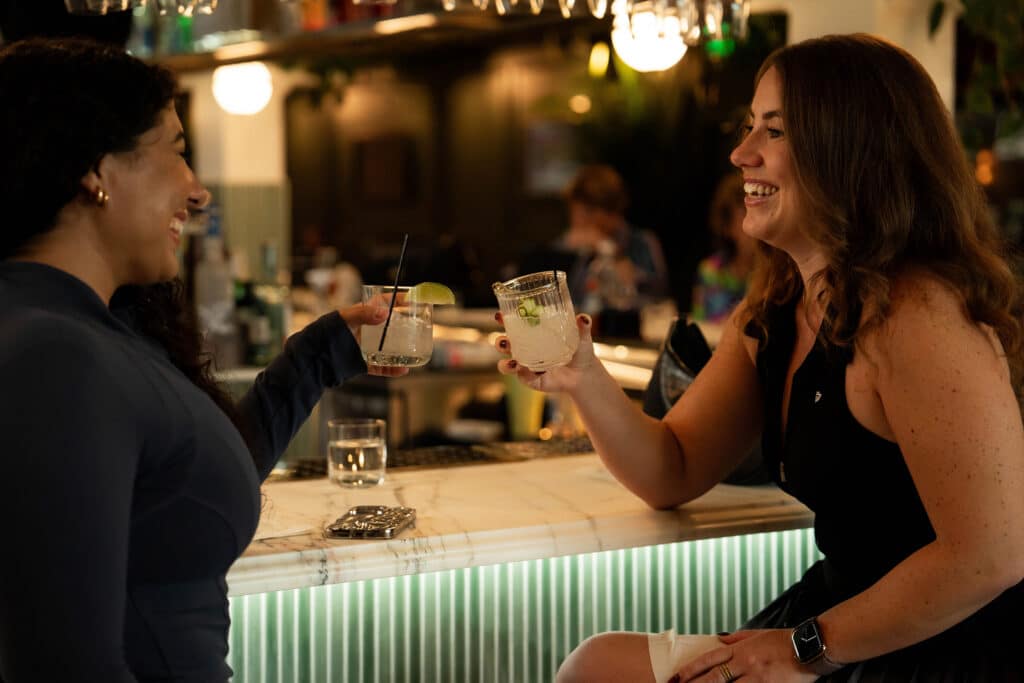
The restaurant serves food made from scratch with a menu inspired by historic Florida and classic country club fare, updated with modern sensibility. There are three bars, including a cocktail bar whose signature drinks draw inspiration from historic sporting events, a coffee and breakfast bar and a bar inside the member’s lounge.
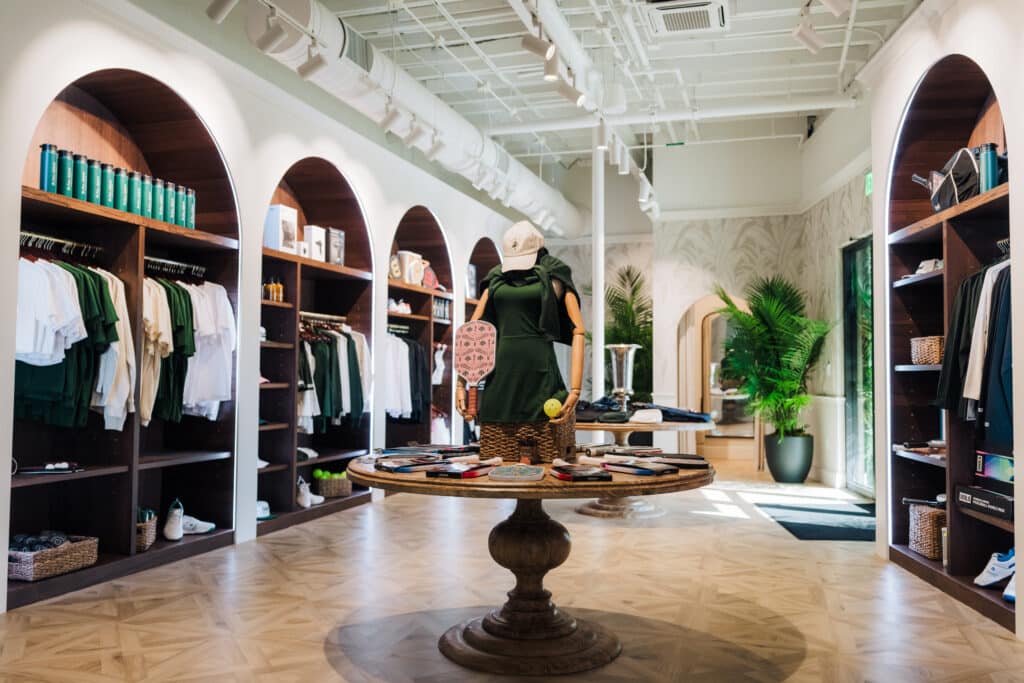
There’s a member’s garden, deck and patio. The clubhouse includes the Commons — a coworking and daytime gathering space — and a member’s parlor designed for a more relaxed evening experience. The pro shop carries multiple pickleball brands, shoes and athletic and athleisure apparel. There’s even a podcast and recording space that community members can use.
On paper, it can sound like too much, which is precisely why it works, said Pressman.
The club’s various pieces aren’t treated as independent amenities designed to make a membership sound more valuable. They’re meant to reinforce one another.
A member can play pickleball, work for a few hours, grab lunch, meet friends for a drink, take a fitness class, play table tennis and attend a social event without ever needing to leave the building. A guest can buy a day pass and experience it all before deciding whether a membership makes sense.
And more than before, people are joining without pickleball being their primary motivation. About half of the club’s members, according to Pressman, don’t even play pickleball. They’re joining for the social club component.
Why People Are Actually Joining
St. Pete Athletic differentiates itself from the way many pickleball facilities define their customer.
The club still serves serious players. Its founders understand the competitive side of the sport, and its programming encompasses everything from casual play to high-level competition. But the club was designed around a broader understanding of why people are drawn to pickleball in the first place.
Pressman points to two qualities that have helped drive the sport’s growth.
First, there’s the unusually low barrier to entry. A new player can get on a court and have fun almost immediately, while someone who wants to become highly competitive can spend years developing the game.
The second is harder for other racquet sports to replicate: The courts emphasize social connection.
Pickleball’s compact playing area keeps people physically close. Players can talk across the net. People sitting on the sidelines are part of the action. Pickup play allows people to meet strangers and become playing partners rather than arriving with an established foursome and staying inside that group.
St. Pete Athletic made those characteristics foundational to the business. Part of that is the decision to remain open to the public.
Anyone can buy a day pass to play. Nonmembers can eat at the restaurant, drink at the bars and spend time at the facility. Membership adds access and discounts, but there’s no initiation fee standing between someone and the experience.
It’s an unusual choice for a club with ambitions that clearly extend into the luxury market. But making the club accessible is less a marketing strategy than an attempt to remain faithful to what the founders believe makes pickleball work.
“You can hop on the court and have fun the first time you play,” said Pressman. “We didn’t want to create a barrier to that experience.
Managing Demand Instead of Maximizing It
The numbers suggest the model has resonated.
Membership was sold out before the club even opened, and St. Pete Athletic kept a waitlist for months while slowly adding members and monitoring how it affected utilization. More recently, the club temporarily opened membership to a larger pool before setting a new capacity.
The limitation is intentional.
“We don’t want thousands and thousands of members where no one can actually get a court,” said Pressman. “It ruins the experience.”
Rather than chase membership numbers, St. Pete Athletic is prioritizing the experience those members have once they walk through the doors. The club has no shortage of evidence that demand exists. More than 12,000 people came through the facility to play during its first six months.
The easier business decision would be to maximize that demand. Instead, the team is trying to determine how much demand the experience can absorb before the experience itself begins to deteriorate.
The club applies the same measured thinking across the business.
For example, St. Pete Athletic initially expected its events business to be meaningful, but didn’t anticipate just how much.
About a third of the business comes from private, corporate and personal events. The facility has hosted events of up to 800 people, including weddings, and has developed partnerships with local hotels that recommend the club to visiting corporate groups. Events have been booked as far as 18 months in advance.
The club has also demonstrated that its facility can operate at a scale well beyond normal daily programming. When it hosted Major League Pickleball, the team built a 1,200-seat stadium and welcomed approximately 5,000 people over five days, setting a record for gross ticket sales for a regular-season MLP event, according to Pressman.
Those opportunities didn’t require a wholesale change in the club’s identity. They were extensions of it.
The same is true of the club’s plans to combine sports in a “tripaddle” tournament, mixing pickleball, padel and table tennis. The objective is to give people more reasons to show up.
Building the Right Team
The ownership group intentionally assembled complementary expertise. Pressman brought a background in entrepreneurship, technology, operations, marketing and sales. D’Amico contributed experience in real estate and professional pickleball, while Jared Sabatini and Nathan Stonecipher brought food-and-beverage and hospitality experience.
When it came to their management team, most didn’t come from a pickleball background. The team knew they could hire people who knew how to run a hospitality business and teach them the sport. Pressman believes the harder qualities to teach are the ones that matter the most in hospitality: personality, attitude, grit and the ability to build relationships.
Pressman said most members are recognized immediately by most of the staff. Employees know what members order, how they like it and when they tend to arrive.
The goal is to make a renovated warehouse in downtown St. Pete feel like a luxury hotel without turning it into an inaccessible institution.
The club takes the same thoughtful approach to feedback.
Pressman said member feedback comes constantly, both informally and through regular surveys. But feedback isn’t treated as an automatic instruction manual. The team weighs what members say against its own knowledge and determines what should change, when it should change and how.
The owners remain active participants in the club. They play at different levels and represent different demographics, and members of the management team are similarly immersed, so they understand it firsthand.

Community as the Business Model
The word community takes on different meaning at St. Pete Athletic. It’s not simply a reference to friendly players, mixers or a welcoming atmosphere. Community is treated as the underlying business asset that makes the courts busier, the restaurant more valuable, the events more desirable and the membership worth maintaining.
“Operators that look at it from a ‘what we need’ versus a ‘why we need’ are going to make the same mistake they did with building too many courts and just focusing on it,” said Pressman.
As the industry grows, making the right investment decisions is critical.
Building courts can create capacity. Adding a restaurant can create another revenue stream. Hosting events can fill a calendar. But none of those things by themselves necessarily give people a reason to care whether one club succeeds over another.
For St. Pete Athletic, the answer starts with understanding what people are actually looking for when they walk through the door.
“They want to play with different people and to be a part of something,” said Pressman. “This is their third space.”
That’s ultimately what makes St. Pete Athletic different from a collection of pickleball courts with amenities attached. The restaurant is part of the community. The courts are part of the community. The gym, clubhouse, bars and social programs all give people different ways to participate in the same place.
And that allows the club to stay to true to the fundamental appeal of pickleball while building a business that’s much bigger than pickleball itself.
“Clubs need to focus on building a strong community,” said Pressman. “Everything else is on top of that.”
For St. Pete Athletic, everything else is quite a lot.
But the foundation is surprisingly simple.

Jordan Meek is a staff writer for Pickleball Innovators, where she covers the rapidly evolving business of pickleball — from facility growth and technology to player experience and industry strategy. A graduate of Denison University with a degree in Journalism, she joined Peake Media in 2025 and brings a passion for storytelling and curiosity to every piece. Jordan is driven to spotlight the leaders shaping the sport and uncover insights that help operators thrive in the fastest-growing game in America. Reach her at jordan@peakemedia.com.